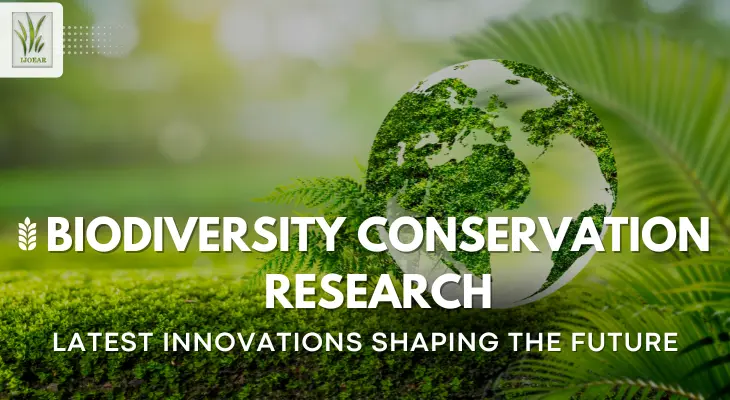
Biodiversity means the variety of all living organisms—plants, animals, fungi, and even tiny microbes. It keeps ecosystems healthy and helps nature balance itself. But due to human activities, pollution, climate change, and deforestation, many species are disappearing. That’s why biodiversity conservation has become more important than ever.
Thanks to new technologies and ideas, researchers are finding smarter ways to protect and restore nature. This blog highlights the latest innovations in biodiversity conservation research and how they’re making a difference for our planet’s future.
Why is Biodiversity Conservation Important?
Biodiversity supports life on Earth in many ways:
- Food Security: A variety of species helps us grow crops, raise livestock, and fish sustainably.
- Climate Protection: Forests and oceans absorb carbon dioxide and regulate the climate.
- Medicine and Health: Many medicines come from plants and animals found in nature.
- Clean Water and Soil: Biodiverse ecosystems purify water and enrich the soil.
- Cultural Value: Nature is deeply connected to many communities' traditions and lifestyles.
When biodiversity is lost, ecosystems become weaker and humans are also affected. That’s why conserving it is not just for nature—it’s for all of us.
Latest Innovations in Biodiversity Conservation Research
Scientists around the world are using cutting-edge tools and creative solutions to protect biodiversity. Here are some of the most exciting innovations:
1. Artificial Intelligence (AI) and Machine Learning
AI is helping scientists process large amounts of data quickly and more accurately. With AI tools, researchers can:
- Identify animals in camera trap images automatically
- Track wildlife patterns and movement
- Predict which species are most at risk
- Monitor forest loss using satellite images
Example: Google’s Wildlife Insights uses AI to analyze millions of wildlife photos to support conservation.
2. Environmental DNA (eDNA)
eDNA is a way to find out which animals live in an area—without even seeing them. Scientists collect water, soil, or air samples and test them for DNA left by animals or plants.
This method is used to:
- Detect rare or endangered species
- Monitor aquatic life like fish and frogs
- Find invasive species early
It’s a non-invasive and low-cost way to check ecosystem health.
3. Drones and Remote Sensing
Drones are flying cameras that give a bird’s-eye view of forests, oceans, and mountains. Researchers use them to:
- Watch wildlife in remote areas
- Detect illegal deforestation or poaching
- Map habitats and nesting areas
- Measure changes in plant growth and soil
Satellites also help monitor biodiversity on a global scale.
4. CRISPR and Genetic Rescue
CRISPR is a powerful gene-editing tool that can change DNA in living organisms. In conservation, it is being explored to:
- Help animals and plants survive diseases
- Boost the genetic strength of small populations
- Save trees or crops from extinction
- Even bring back extinct species (like the woolly mammoth—though it’s still in early stages)
Genetic rescue is promising but also raises ethical questions. It must be used responsibly.
5. Big Data and Biodiversity Informatics
There’s now more biodiversity data than ever before. Scientists use global databases to understand what’s happening across regions and species.
These tools help to:
- Track species populations and extinction risks
- Plan protected areas and wildlife corridors
- Combine climate data with habitat information
- Create maps of biodiversity hotspots
Examples of platforms: GBIF, IUCN Red List, and Map of Life

6. Citizen Science and Mobile Apps
Everyone can help protect biodiversity—not just scientists. With mobile apps like:
- iNaturalist – for recording plant and animal sightings
- eBird – for tracking bird species
- Seek – for identifying nature using your phone camera
Ordinary people are now contributing to real scientific research. This helps cover more ground and build awareness among communities.
7. Wildlife Corridors and Rewilding
Protecting only small forests is not enough—animals need to move between areas safely. That’s why researchers and conservationists are creating wildlife corridors, which are safe pathways connecting different habitats.
Also, rewilding projects are bringing back important species to restore natural balance.
Examples include:
- Wolves returned to Yellowstone Park (USA)
- Bison reintroduced in parts of Europe
- Cheetahs brought back to India after 70 years
8. Nature-Based Solutions and Indigenous Knowledge
Modern science is learning from traditional communities who’ve lived with nature for generations. Researchers now combine local knowledge with science to:
- Restore forests and wetlands
- Create sustainable farming systems
- Protect sacred natural sites
- Involve indigenous people in conservation leadership
This approach is respectful, effective, and inclusive.
Real-World Impact of Biodiversity Research
These innovations are helping:
- Governments make smarter conservation laws
- Organizations protect endangered species
- Communities adapt to climate change
- Scientists predict future threats early
- The world meet global goals like the UN Sustainable Development Goals (SDGs) and the Global Biodiversity Framework
What’s Next in Biodiversity Conservation?
Looking ahead, biodiversity research will focus on:
- Using AI and satellite data for real-time conservation
- Expanded use of eDNA and genetic monitoring
- Understanding how climate change affects species behavior
- Creating global networks of protected and connected areas
- Involving more young people and communities in conservation
Biodiversity is not just about saving rare species—it's about protecting the foundation of life on Earth. As threats like climate change, pollution, and habitat destruction grow, so must our response. The latest innovations in biodiversity conservation research—from AI and drones to gene editing and citizen science—are transforming how we understand, monitor, and protect nature.
By combining advanced technologies with traditional ecological wisdom, researchers and communities can work hand in hand to build resilient ecosystems and a more sustainable future. The journey ahead is challenging, but innovation, collaboration, and informed action can ensure that the planet remains rich in life for generations to come.