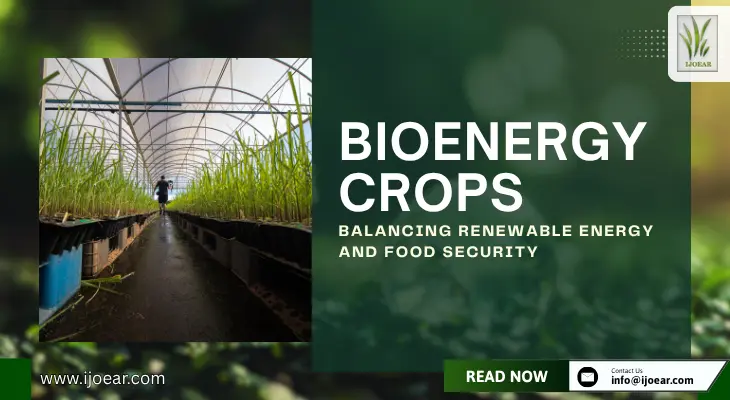
As the world transitions toward cleaner energy systems, bioenergy — energy derived from organic materials such as plants and agricultural residues — has gained global attention. Among renewable energy sources, bioenergy crops hold a unique position because they can be cultivated on a large scale to produce biofuels, biogas, and biomass-based electricity. However, this potential comes with an important dilemma: how to produce energy without compromising global food security. Striking this balance is critical to achieving the United Nations' Sustainable Development Goals (SDGs) on affordable energy, zero hunger, and climate action.
What Are Bioenergy Crops?
Bioenergy crops are plant species cultivated specifically for producing biofuels and other forms of renewable energy. Unlike food crops, they are often grown for their high biomass yield, fast growth rate, and adaptability to marginal lands. These crops are processed into bioethanol, biodiesel, or biogas, replacing fossil fuels in transport, industry, and electricity generation.
Examples of common bioenergy crops include:
- Sugarcane and maize (corn): Used for producing bioethanol.
- Soybean, rapeseed, and oil palm: Sources of biodiesel.
- Switchgrass, miscanthus, and sorghum: High-yield lignocellulosic crops for biomass energy.
- Jatropha curcas and pongamia: Non-edible oilseed crops for biodiesel on marginal lands.
Global Significance of Bioenergy
Bioenergy contributes nearly 10% of the world's total primary energy supply, according to the International Energy Agency (IEA). Modern bioenergy systems have the potential to:
- Reduce greenhouse gas (GHG) emissions, displacing fossil fuels.
- Enhance rural development, generating income and jobs in agricultural regions.
- Utilize agricultural residues and marginal lands, thus not always competing with food systems.
Countries such as Brazil, India, China, and the United States have made significant progress in large-scale biofuel programs — from ethanol-blended fuels to biodiesel initiatives — showcasing how agricultural innovation can support sustainable energy transitions.
Food vs. Fuel Debate
While bioenergy offers environmental and economic benefits, it also raises a persistent concern — competition with food production. The expansion of energy crops can:
- Divert arable land away from food crops.
- Increase food prices due to higher demand for land and raw materials.
- Reduce biodiversity through large-scale monoculture plantations.
For example, the growing demand for corn-based ethanol in the U.S. and palm oil biodiesel in Southeast Asia has led to debates on land-use change and deforestation. Therefore, the future of bioenergy must integrate land management, food policy, and sustainable agriculture strategies.

Second-Generation and Advanced Bioenergy Crops
To overcome the food-versus-fuel challenge, researchers have developed **second-generation (2G) bioenergy crops** — plants that do not compete directly with food supply chains. These crops utilize non-edible biomass, agricultural residues, or cellulosic materials, ensuring minimal interference with food production.
Examples include:
- Switchgrass and Miscanthus: Perennial grasses with high energy yield and low input needs.
- Agave and Bamboo: Thrive in semi-arid conditions with minimal water requirements.
- Algae: A third-generation bioenergy resource that can produce biofuels using saline or wastewater, not farmland.
These innovations highlight a growing movement toward sustainable bioenergy that coexists with food systems rather than replacing them.
Importance of Bioenergy Crops:
- Renewable and Low-Carbon Energy Source: Replacing fossil fuels with bioenergy significantly reduces carbon emissions and supports climate action goals.
- Rural Livelihood Enhancement: Bioenergy crop cultivation creates employment opportunities in farming, processing, and logistics, particularly in developing economies.
- Soil Health and Carbon Sequestration: Perennial energy crops improve soil structure, prevent erosion, and enhance carbon storage in roots and biomass. This aligns with carbon farming practices.
- Energy Security and Diversification: Bioenergy reduces dependency on imported fossil fuels and contributes to national energy self-sufficiency.
- Waste Utilization: Agricultural residues, manure, and by-products can be converted into biogas, minimizing waste and improving sustainability.
Challenges and Limitations:
Despite its promise, scaling bioenergy crops faces significant challenges:
- Land and Water Competition: Arable land and freshwater are finite resources. Unsustainable expansion can jeopardize food supply and ecosystems.
- Low Conversion Efficiency: Biofuel production technologies are improving, but efficiency and cost remain limiting factors, especially in developing countries.
- Environmental Impacts: Large-scale monocropping for bioenergy may reduce biodiversity and increase soil degradation.
- Policy and Economic Constraints: Inconsistent policies, subsidies, and lack of investment hinder the adoption of advanced bioenergy technologies.
- Public Perception and Awareness: Misconceptions about "food vs. fuel" continue to slow public acceptance of bioenergy innovations.
Balancing Renewable Energy and Food Security:
Achieving harmony between energy production and food security requires integrated solutions:
- Promoting second- and third-generation bioenergy that relies on non-food biomass or marginal lands.
- Implementing sustainable land-use planning to avoid deforestation and protect biodiversity.
- Encouraging circular bioeconomy models, where agricultural waste and by-products are reused for bioenergy.
- Strengthening research and policy collaboration among governments, universities, and the private sector.
- Enhancing awareness and farmer participation in bioenergy programs through education and incentives.
Such a multidimensional approach can ensure that bioenergy supports energy transitions while maintaining agricultural sustainability and food availability.
Scope of Ph.D. in Bioenergy Crops and Food Security
A Ph.D. in Bioenergy Crops and Food Security offers vast interdisciplinary research opportunities that address two of the world's most pressing challenges — sustainable energy generation and global nutrition security. This advanced academic path integrates plant biotechnology, agronomy, environmental sciences, and energy policy to create innovative, long-term solutions.
1. Research Areas
Ph.D. scholars can explore diverse domains such as:
- Genetic improvement of bioenergy crops (e.g., Jatropha, Miscanthus, Sweet Sorghum) for higher yield and stress tolerance.
- Optimization of biofuel production systems, including lignocellulosic biomass conversion and bioreactor efficiency.
- Sustainable land-use management, studying how to grow energy crops without compromising food production.
- Climate resilience studies, focusing on how bioenergy cultivation impacts soil health, water resources, and biodiversity.
- Socioeconomic impact assessments, evaluating rural employment, farmer adoption rates, and global energy markets.
2. Global Research Opportunities
Countries like the USA, UK, Germany, Netherlands, and India are investing heavily in renewable energy and sustainable agriculture. Many international universities and research institutes offer funded Ph.D. positions focusing on:
- Biofuel technology innovation
- Crop genomics for energy optimization
- Integrated food-energy systems
- Carbon sequestration through energy farming
Institutions such as the International Crops Research Institute for the Semi-Arid Tropics (ICRISAT) and CIMMYT are leading research in sustainable bioenergy crops, offering collaboration opportunities for Ph.D. candidates.
3. Career Prospects
Graduates holding a Ph.D. in this field can pursue careers in:
- Academic Research and Teaching – as professors or research scientists in agricultural or environmental universities.
- Government and Policy Advisory – guiding national strategies on biofuel regulation and food security frameworks.
- Renewable Energy Companies – focusing on R&D for biofuel production and sustainable land management.
- International Organizations (FAO, UNDP, ICAR, ICRISAT) – working on sustainability-driven global initiatives.
- Private Sector – consulting roles in agribusiness, biotech firms, and sustainability-driven startups.
4. Future Outlook
The demand for bioenergy experts is expected to grow as countries transition toward green economies and carbon-neutral goals. Ph.D. researchers can contribute directly to:
- Developing next-generation bioenergy technologies.
- Enhancing food-energy balance models to ensure sustainable agricultural practices.
- Shaping policies that align renewable energy production with global hunger eradication goals.
In essence, pursuing a Ph.D. in Bioenergy Crops and Food Security equips scholars with the expertise to shape a sustainable, energy-secure, and hunger-free future. For those interested in this path, learn more about Ph.D. admissions requirements in agriculture and how to write a compelling research proposal.
Bioenergy crops represent one of the most promising frontiers in the quest for renewable energy, but their success lies in maintaining a delicate balance with food systems. The path forward requires integrated land management, innovation, and sustainable policies that unite the goals of energy independence, climate mitigation, and global food security. As the world moves toward a low-carbon future, bioenergy — if managed responsibly — can be both a power source and a solution to hunger.