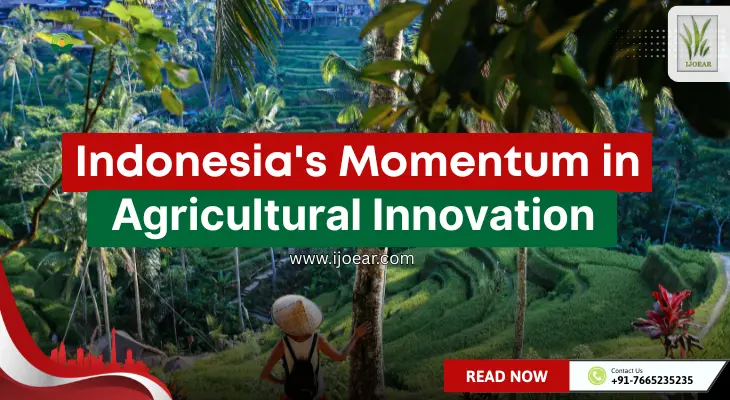
Agriculture has always been the backbone of Indonesia’s economy, culture, and food security. With more than half of its population directly or indirectly involved in farming, the sector continues to play a pivotal role in national growth. In recent years, however, Indonesia has entered a new phase—embracing innovation, sustainability, and digital transformation to strengthen its agricultural landscape. This momentum is positioning the country as a regional leader in modern, technology-driven farming.
Traditional Roots, Modern Needs
Indonesia’s agricultural heritage is deeply rooted in its fertile soils, tropical climate, and diverse ecosystems. From rice paddies in Java to palm oil plantations in Sumatra, the nation has long relied on traditional farming practices. However, rapid population growth, urbanization, and global climate change have created new challenges that traditional methods alone cannot address. Issues such as land degradation, fluctuating yields, food security concerns, and environmental sustainability demand a more innovative approach.
Government Policies Driving Change
Recognizing the need for reform, the Indonesian government has rolled out several initiatives aimed at transforming agriculture. Programs like the Food Estate Project and subsidies for digital farming tools are encouraging farmers to adopt modern practices. Moreover, partnerships with private companies and global organizations are providing resources, training, and funding to accelerate this transformation.
The government’s focus is not only on boosting productivity but also on ensuring that farming remains sustainable. By integrating technology with traditional methods, policymakers aim to create an ecosystem where farmers can thrive while safeguarding the environment.
Digital Agriculture and Smart Farming
One of the most significant drivers of Indonesia’s agricultural innovation is the rise of digital farming platforms. Mobile applications now connect farmers to marketplaces, provide real-time weather forecasts, and offer expert guidance on crop management. Startups and agritech companies are developing solutions such as drone-based monitoring, soil health sensors, and AI-driven pest management systems.
These smart farming tools are helping farmers optimize resource use, reduce waste, and increase yields. For example, precision irrigation systems are allowing efficient water usage, while data-driven insights are guiding planting decisions to maximize output.
Research and Educational Institutions
Indonesia’s universities and research centers are playing a vital role in shaping agricultural innovation. Institutions like Bogor Agricultural University (IPB University) and the Indonesian Agency for Agricultural Research and Development (IAARD) are leading research in biotechnology, crop resilience, and sustainable farming systems. Collaborative projects with international universities and organizations are also enabling Indonesian researchers to explore cutting-edge technologies such as gene editing, biofertilizers, and climate-smart agriculture.
Sustainable Practices and Climate Resilience
Climate change poses a serious threat to Indonesia’s agriculture, with rising temperatures, unpredictable rainfall, and increased risk of pests and diseases. In response, farmers and policymakers are focusing on climate-resilient practices such as:
- Diversifying crops to reduce dependency on rice and palm oil.
- Promoting organic farming and reduced chemical use.
- Encouraging agroforestry and integrated farming systems.
- Exploring renewable energy for rural and farming communities.
By promoting sustainability, Indonesia is not only protecting its agricultural productivity but also contributing to global climate action.

Role of Agritech Startups
The past few years have seen a surge in agritech startups in Indonesia, supported by venture capital funding and government incentives. Companies such as TaniHub and eFishery are revolutionizing supply chains, improving farmer incomes, and making agricultural markets more efficient. These startups are bridging the gap between smallholder farmers and consumers, ensuring fair pricing, transparency, and access to modern tools.
Challenges Ahead
Despite the progress, Indonesia’s agricultural sector still faces hurdles:
- Limited digital literacy among rural farmers.
- Infrastructure gaps in remote areas.
- High initial costs of modern technologies.
- Balancing commercial farming with smallholder needs.
Addressing these challenges requires stronger public-private partnerships, targeted training programs, and inclusive policies that ensure no farmer is left behind.
Future Outlook
Indonesia is on a promising path toward becoming a leader in agricultural innovation in Southeast Asia. By combining policy support, technological advancements, sustainable practices, and active participation from startups and researchers, the nation is building a resilient and future-ready agricultural system.
The momentum in agricultural innovation is not just about boosting yields—it is about ensuring food security, improving farmer livelihoods, protecting the environment, and securing Indonesia’s place in the global agricultural economy.