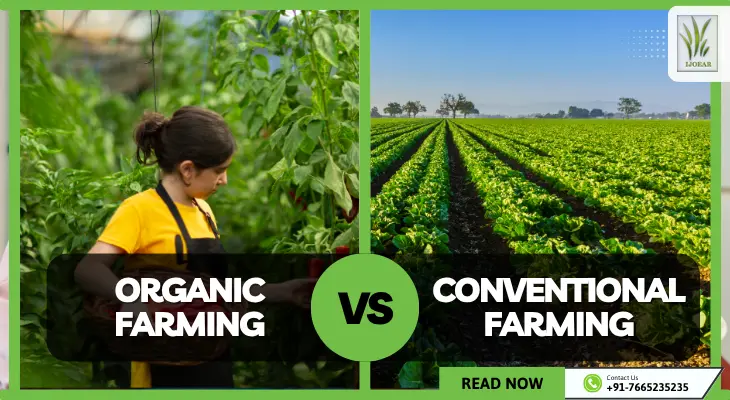
Farming plays a big role in how we grow food and take care of the Earth. Two major types of farming today are organic farming and conventional farming. Both have their own ways of working and different effects on the environment. But which one is more sustainable? Let’s explore.
What Is Organic Farming?
Organic farming is a natural way of growing food. It avoids harmful chemicals and focuses on healthy soil, clean water, and biodiversity. This method follows strict guidelines that aim to protect the environment and human health.
Key Features of Organic Farming:
- No chemical fertilizers or pesticides – Uses compost, manure, and natural pest control methods.
- No GMOs – Organic farms avoid genetically modified seeds.
- Crop rotation and mixed cropping – Helps maintain soil fertility and prevent pests.
- Animal welfare – Livestock is raised with access to outdoors and without antibiotics or growth hormones.
- Encourages biodiversity – Organic farms are often home to insects, birds, and animals that support the ecosystem.
What Is Conventional Farming?
Conventional farming, also known as industrial farming, uses modern technology and chemicals to grow large amounts of food quickly. This method became popular after the Green Revolution to meet growing food demands.
Key Features of Conventional Farming:
- Synthetic fertilizers and pesticides – Used to increase crop yield and control pests.
- Genetically modified seeds – Designed for higher resistance and productivity.
- Monoculture farming – Growing one type of crop over large areas.
- High-tech machinery – Tractors, harvesters, irrigation systems, and more.
- Focus on maximum yield – Often at the cost of soil and water health.
Comparing Sustainability
Let’s see how each type of farming performs in terms of sustainability. Here’s a side-by-side comparison to help understand how these systems perform in terms of sustainability:
| Factor | Organic Farming | Conventional Farming |
|---|---|---|
| Soil Health | Builds soil fertility naturally through compost and crop rotation | Depletes soil nutrients; overuse of chemicals can lead to erosion |
| Water Conservation | Efficient use of water; avoids chemical runoff into water sources | Often wastes water through large-scale irrigation; leads to pollution |
| Chemical Use | Avoids harmful pesticides and fertilizers | Heavy use of synthetic chemicals that harm the environment |
| Biodiversity | Promotes pollinators, birds, and natural predators | Destroys habitats and reduces wildlife diversity |
| Energy Consumption | Low energy input (manual or small-scale tools) | High energy use due to machines and chemical production |
| Greenhouse Emissions | Lower emissions due to natural practices | Higher emissions from machinery, fertilizers, and livestock waste |
| Crop Yield | Usually lower per acre | Higher productivity per acre |
| Cost of Production | Often higher, especially in labor and certification | Lower due to economies of scale |
| Health Impact | Lower chemical residue in food; supports safer ecosystems | Food may have chemical residues; long-term health effects are debated |
Which Farming Method Is More Sustainable?
Sustainability means meeting today’s needs without harming the ability of future generations to meet theirs. It includes environmental health, economic strength, and social well-being.
Organic farming is more sustainable in terms of:
- Soil protection
- Water conservation
- Long-term environmental safety
- Lower carbon footprint
- Wildlife and ecosystem support
However, it has some challenges:
- Lower crop yield
- Higher cost to the farmer and the consumer
- Needs more land to produce the same amount of food
Conventional farming is better for:
- Feeding large populations
- Lower food prices
- Quick production during food shortages
But it comes at a cost—damaging soil, water, air, and biodiversity over time.

The Future: A Balanced Approach
The future of farming may lie in integrated or sustainable farming, which blends the best of both worlds. For example:
- Using natural fertilizers along with modern tools
- Adopting smart irrigation to save water
- Growing multiple crops (polyculture) to reduce pest attacks
- Training farmers to shift towards climate-resilient practices
When we think long-term, organic farming offers more benefits to the environment and supports sustainability goals. But to ensure global food security, we also need the productivity of conventional farming. The solution is not to choose one over the other, but to combine techniques and move toward a sustainable agricultural future.