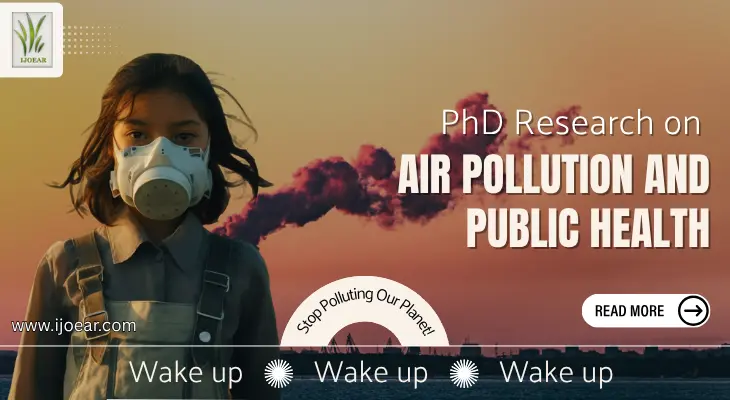
Air pollution is one of the world’s most serious environmental challenges. It silently affects millions of people each year, leading to respiratory diseases, cardiovascular issues, and even premature death. For scholars and researchers, pursuing a PhD in Air Pollution and Public Health offers a unique opportunity to make impactful contributions to science, policy, and society.
This blog explores why this area is crucial, what kind of research topics are available, and how PhD scholars can drive meaningful change through their studies.
Why Focus on Air Pollution and Public Health?
The link between polluted air and health problems is well-documented. Major cities worldwide are battling smog, high PM2.5 levels, and increasing cases of asthma and lung cancer. According to the World Health Organization (WHO), air pollution contributes to nearly 7 million premature deaths annually.
PhD-level research in this domain can:
- Inform public health policies.
- Influence environmental regulations.
- Guide urban planning.
- Improve early disease detection and preventive care.
Key Research Areas for PhD Candidates in Air Pollution and Public Health
A PhD in this interdisciplinary field allows candidates to explore the science of pollutants, their sources, their interactions with human health, and how to mitigate their impact. Below are some of the most relevant and emerging areas of research:
1. Health Impact Assessment of Air Pollutants
This area involves studying how specific pollutants affect human health, particularly among sensitive groups such as children, elderly, and people with pre-existing conditions.
Key Focus Areas:
- Respiratory and cardiovascular impacts of PM2.5, PM10, NOx, CO, SO2, ozone, and VOCs
- Short-term vs. long-term exposure analysis
- Birth defects and developmental issues linked to prenatal exposure
- Quantitative risk assessments using exposure-response relationships
Tools Used:
- Cohort and case-control studies
- Biomonitoring (e.g., measuring pollutant levels in blood or urine)
- Use of health databases and electronic health records
2. Air Quality Monitoring and Predictive Modeling
This domain centers on collecting real-time data on air pollution and using computational models to predict pollution levels and trends.
Key Focus Areas:
- Development of low-cost, high-accuracy air sensors
- Integration of satellite data and ground monitoring
- Predictive models for smog events and pollutant dispersion
- Application of Artificial Intelligence (AI) and Machine Learning (ML)
Tools Used:
- GIS (Geographic Information Systems)
- Remote sensing
- Time-series analysis
- Models like AERMOD, CMAQ, or WRF-Chem
3. Epidemiological Studies
Epidemiology helps in understanding how exposure to air pollution correlates with disease occurrence in populations over time.
Key Focus Areas:
- Association between air pollution and incidence of asthma, COPD, heart disease, cancer, and neurological disorders
- Vulnerability studies based on age, gender, occupation, and socioeconomic status
- Chronic vs. acute exposure outcomes
- Multi-city or multi-country cohort studies
Tools Used:
- Statistical software (R, SPSS, STATA)
- Meta-analysis and regression modeling
- Disease mapping techniques
4. Indoor vs. Outdoor Air Pollution Exposure
While much attention is given to outdoor air quality, indoor pollution is equally, if not more, dangerous—especially in developing countries.
Key Focus Areas:
- Comparison of pollutant types and concentrations indoors (cooking, heating, smoking) vs. outdoors (traffic, industry)
- Health risks in households using solid fuels or biomass
- Exposure in schools, offices, and public buildings
- Indoor air purification strategies and ventilation studies
Tools Used:
- Indoor air samplers
- Personal exposure monitoring devices
- Survey-based data collection on housing and habits

5. Public Policy Evaluation and Environmental Justice
This area focuses on analyzing the effectiveness of air quality regulations and ensuring that all communities benefit from cleaner environments.
Key Focus Areas:
- Impact of governmental policies like emission control norms, bans on stubble burning, etc.
- Cost-benefit analysis of interventions
- Policy gaps in low- and middle-income countries
- Studies on environmental justice and pollution burden on marginalized communities
Tools Used:
- Legal framework analysis
- Policy modeling and simulations
- Stakeholder interviews and qualitative research
- Collaboration with government agencies and NGOs
6. Climate Change and Air Pollution Interlinkages
This research explores how climate change and air pollution are interdependent, and how this relationship affects public health globally.
Key Focus Areas:
- Impact of rising temperatures on ground-level ozone and secondary pollutant formation
- Studies on wildfires, dust storms, and extreme weather events as pollution sources
- Feedback loops between greenhouse gas emissions and air quality
- Combined health effects of air pollution and heat stress
Tools Used:
- Climate models integrated with air quality data
- Attribution studies
- Scenario-based forecasting for future risk assessments
7. Genetic and Epigenetic Impacts of Air Pollution
A cutting-edge area, this research investigates how pollution affects human DNA and gene expression, potentially leading to inherited disorders or long-term health conditions.
Key Focus Areas:
- DNA methylation and gene expression changes due to pollutant exposure
- Role of pollutants in oxidative stress and inflammation pathways
- Epigenetic markers as early indicators of disease risk
- Transgenerational effects of pollution exposure
Tools Used:
- Molecular biology techniques (PCR, sequencing)
- Bioinformatics tools for genomic analysis
- Collaboration with biomedical and genetic researchers
8. Community-Based Interventions and Behavioral Studies
Here, research focuses on working with communities to reduce exposure risks and promote behavioral change.
Key Focus Areas:
- Public awareness campaigns and education
- Behavior-driven interventions like mask use, avoiding high-pollution zones
- Cultural factors affecting perception and response to air pollution
- Evaluation of community health outcomes before and after interventions
Tools Used:
- Surveys, focus groups, and participatory research methods
- Mobile apps and real-time alert systems
- Impact analysis using health outcome metrics
9. Technological Innovations for Pollution Mitigation
PhD candidates can also work on inventing or refining technologies to reduce emissions or protect individuals from exposure.
Key Focus Areas:
- Smart air filters and purifiers
- Vehicle emission control technologies
- Green building designs for improved indoor air quality
- Urban planning for low-emission zones and green spaces
Tools Used:
- Engineering design software
- Environmental simulations
- Field testing and validation studies
Potential Outcomes and Impact
PhD research in this field can lead to:
- Development of early warning systems for air quality alerts
- New insights into disease pathways and pollutant exposure
- Community-level interventions and awareness programs
- Policy briefs to support sustainable urban development
- Academic publications and collaborations with environmental agencies
Career Opportunities After PhD
- Environmental Scientist or Health Risk Assessor
- Researcher in Public Health Institutes
- Policy Advisor or Environmental Consultant
- University Professor or Academic Researcher
- Roles in WHO, UNEP, or National Health Agencies
A PhD in Air Pollution and Public Health is not just a step forward in academic achievement—it’s a powerful tool to bring about social, environmental, and health transformations. With growing global concerns around pollution and health equity, researchers in this field are more important than ever.