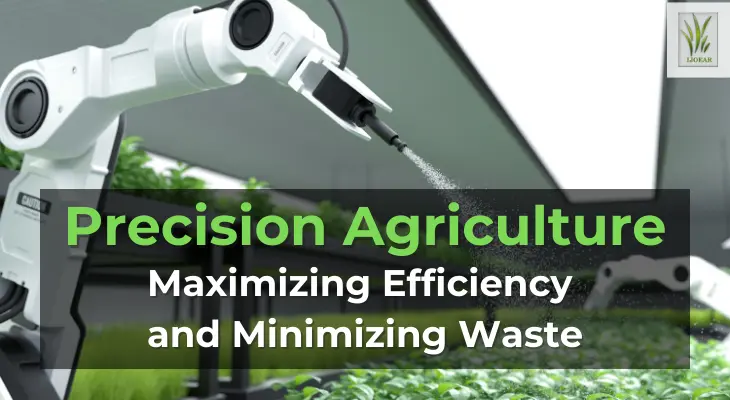
Precision agriculture is transforming the farming industry by using technology to optimize crop production, reduce waste, and improve sustainability. With the world’s population growing and resources becoming scarcer, farmers are adopting innovative techniques to produce more food while minimizing environmental impact. This approach ensures that every resource—water, fertilizers, and pesticides—is used efficiently.
What is Precision Agriculture?:
Precision agriculture is a farming method that uses data, sensors, satellite imagery, and automation to manage crops with accuracy. Unlike traditional farming, which applies the same treatment to entire fields, precision agriculture tailors inputs based on real-time data. This helps farmers monitor soil health, predict weather patterns, and determine the best time for planting and harvesting.

Key Technologies in Precision Agriculture:
- GPS and GIS Mapping: Farmers use GPS and Geographic Information Systems (GIS) to create detailed maps of their fields. These maps help identify variations in soil fertility, moisture levels, and crop growth.
- IoT Sensors and Drones: Internet of Things (IoT) sensors collect data on soil moisture, temperature, and plant health, while drones capture real-time images to detect issues like pest infestations or nutrient deficiencies.
- Automated Machinery: Tractors, seeders, and harvesters equipped with AI-driven automation help reduce labor costs and ensure precise application of inputs.
- Variable Rate Technology (VRT): VRT adjusts the amount of water, fertilizers, and pesticides applied based on the specific needs of different areas within a field.
- Big Data and AI: Machine learning and artificial intelligence analyze large amounts of data to provide farmers with recommendations on crop management, pest control, and irrigation scheduling.
Benefits of Precision Agriculture:
- Higher Crop Yields: By optimizing inputs, farmers can maximize productivity without increasing land use.
- Resource Conservation: Precision irrigation and targeted fertilization reduce water and chemical waste.
- Cost Savings: Farmers save money by using fewer resources while increasing efficiency.
- Environmental Sustainability: Reducing overuse of chemicals helps protect soil, water, and biodiversity.
- Improved Decision-Making: Real-time data allows farmers to make informed choices about planting, harvesting, and disease management.
Challenges in Precision Agriculture:
- High Initial Costs: Advanced technologies require significant investment, making it difficult for small-scale farmers to adopt.
- Technical Knowledge: Farmers need training to operate and interpret data from precision agriculture tools.
- Connectivity Issues: In rural areas, poor internet access can limit the effectiveness of real-time data collection and analysis.
How IJOEAR Can Help in Precision Agriculture Research:
The International Journal of Environmental and Agriculture Research (IJOEAR) provides a platform for publishing high-quality research on precision agriculture. Researchers can contribute their findings on smart farming technologies, sustainable practices, and innovative solutions. Our journal offers:
- Peer-reviewed research publication to maintain high academic standards.
- Open-access availability, ensuring global readership and knowledge sharing.
- Indexing in major databases, increasing the visibility of research work.
- Multidisciplinary focus, covering various aspects of precision agriculture.
By publishing with IJOEAR, researchers can help advance the field of precision agriculture and contribute to a more sustainable future.
Precision agriculture is revolutionizing modern farming by improving efficiency, reducing waste, and promoting sustainability. With advancements in technology, data-driven farming will continue to play a crucial role in meeting global food demands while protecting the environment. As this field evolves, continuous research and innovation will be key to unlocking its full potential.