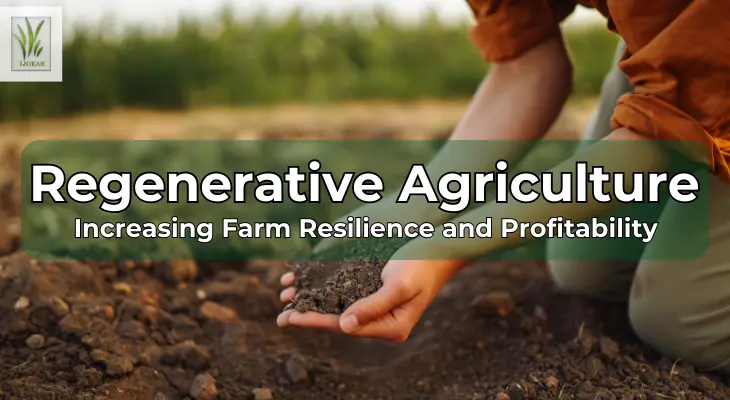
Regenerative agriculture is an innovative farming approach that focuses on restoring soil health, improving biodiversity, and increasing farm productivity. Unlike conventional methods that deplete natural resources, regenerative practices enhance soil fertility, retain water, and reduce dependence on chemical inputs. As a result, farmers can boost yields, lower costs, and build long-term resilience against climate change.
What is Regenerative Agriculture?
Regenerative agriculture is a holistic method of farming that works with nature rather than against it. It aims to improve soil health, capture carbon, and restore ecosystems while maintaining high crop productivity. By using natural processes, farmers can increase soil fertility, enhance water retention, and promote biodiversity.
Key Practices of Regenerative Agriculture:
- Cover Cropping: Growing cover crops between main crops prevents soil erosion, adds organic matter, and improves nutrient cycling.
- No-Till Farming: Reducing soil disturbance maintains soil structure, improves water retention, and supports beneficial microorganisms.
- Crop Rotation: Changing crops each season reduces pests, improves soil nutrients, and prevents disease buildup.
- Composting and Organic Fertilization: Using natural fertilizers like compost and manure enhances soil fertility without synthetic chemicals.
- Agroforestry and Perennial Crops: Planting trees alongside crops improves biodiversity, stabilizes soil, and provides additional income sources.
- Holistic Grazing: Managing livestock to mimic natural grazing patterns helps regenerate pasturelands and reduce desertification.
Benefits of Regenerative Agriculture:
- Increased Soil Health: Healthy soil retains more nutrients and water, leading to better crop growth.
- Higher Yields and Profitability: Improved soil conditions result in better harvests, reducing costs on fertilizers and pesticides.
- Climate Resilience: Farms become more resistant to droughts, floods, and extreme weather.
- Carbon Sequestration: Healthy soils absorb carbon from the atmosphere, reducing greenhouse gas emissions.
- Biodiversity Enhancement: Encourages beneficial insects, birds, and microorganisms that support plant health.
- Reduced Dependence on Chemicals: Natural soil improvement reduces the need for synthetic fertilizers and pesticides.
Challenges in Regenerative Agriculture:
- Initial Transition Costs: Farmers may need time and investment to shift from conventional methods.
- Knowledge and Training: Understanding soil biology and natural farming techniques requires education and support.
- Market Access: Consumers and supply chains need to recognize and support regenerative products.

How IJOEAR Can Help in Regenerative Agriculture Research:
The International Journal of Environmental and Agriculture Research (IJOEAR) offers a platform for researchers to publish studies on regenerative agriculture. Our journal supports:
- Peer-reviewed research publication for scientific validation and credibility.
- Open-access publishing, ensuring worldwide visibility.
- Indexing in major research databases, increasing accessibility.
- Multidisciplinary research opportunities, covering various aspects of sustainable agriculture.
By publishing with IJOEAR, researchers contribute valuable insights to the agricultural community, helping farmers adopt sustainable and profitable practices.
Regenerative agriculture is a game-changing approach that enhances farm resilience, boosts productivity, and protects the environment. By prioritizing soil health and working with nature, farmers can ensure long-term sustainability and profitability. As research continues, more farmers will benefit from these practices, securing a healthier planet and a thriving agricultural sector.