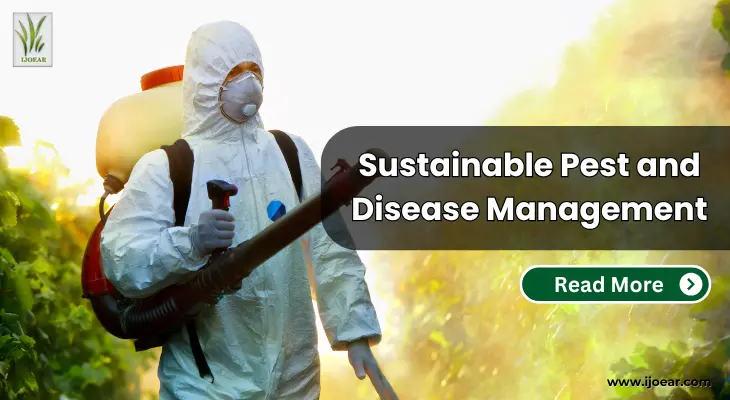
Pests and plant diseases are major threats to global food production. If not controlled properly, they can reduce crop yields, damage soil health, and increase farming costs. However, excessive use of chemical pesticides harms the environment and human health. That’s why sustainable pest and disease management is crucial. It focuses on eco-friendly, cost-effective, and long-term solutions to control pests and diseases without harming the ecosystem.
Why Sustainable Pest and Disease Management Matters?
- Reduces Chemical Dependency – Avoids excessive use of synthetic pesticides that can harm beneficial organisms and contaminate soil and water.
- Promotes Biodiversity – Encourages natural predators and plant diversity to keep pests under control.
- Ensures Long-Term Soil Health – Reduces the buildup of toxic residues in soil.
- Enhances Crop Resilience – Makes plants stronger and more resistant to diseases.
- Supports Human and Environmental Health – Prevents pesticide contamination in food and reduces air and water pollution.
Key Sustainable Methods for Pest and Disease Management
1. Integrated Pest Management (IPM)
IPM is a multi-layered approach that combines biological, mechanical, and minimal chemical control methods to manage pests sustainably. It aims to reduce reliance on chemical pesticides while maintaining crop health. The key components of IPM include:
- Monitoring & Identification – Regularly checking crops for pest infestations and diseases helps detect issues early, allowing timely intervention.
- Biological Control – Beneficial insects like ladybugs, lacewings, and predatory beetles help control pest populations naturally.
- Mechanical & Physical Control – Farmers use traps, barriers, row covers, and manual removal of pests to prevent infestations.
- Chemical Control as a Last Resort – If all other methods fail, targeted and eco-friendly pesticides are used in minimal quantities to reduce environmental impact.
2. Crop Rotation and Diversification
Growing different crops in the same field over different seasons prevents the buildup of pests and soil-borne diseases. This method:
- Disrupts pest life cycles by removing their preferred host plants, reducing their population.
- Improves soil fertility by balancing nutrient usage, especially when nitrogen-fixing plants like legumes are included in rotations.
3. Use of Resistant Crop Varieties
Developing and growing disease-resistant and pest-tolerant crops reduces the need for chemical treatments. These varieties:
- Are bred to withstand common pests and diseases, helping reduce crop losses.
- Require fewer chemical interventions, making farming more sustainable and cost-effective.

4. Organic Pest Control Methods
Natural pest control methods ensure eco-friendly farming by using plant-based extracts and organic techniques. Some effective methods include:
- Neem Oil, Garlic & Chili Extracts – These natural pesticides deter insects without harming beneficial organisms.
- Companion Planting – Certain plants (e.g., basil near tomatoes) naturally repel pests and enhance plant growth.
5. Biological Control Agents
Using natural enemies of pests is a sustainable and effective way to manage infestations. Examples include:
- Predatory insects like ladybugs and parasitic wasps, which feed on aphids and caterpillars.
- Microbial pesticides (e.g., Bacillus thuringiensis or Bt), a bacteria that targets harmful pests without affecting beneficial insects.
6. Soil and Water Management
Healthy soil and efficient water use make plants more resilient to pests and diseases. Farmers achieve this by:
- Maintaining balanced soil nutrients through composting, mulching, and cover cropping to improve plant resistance.
- Using drip irrigation to prevent excess moisture, which reduces fungal diseases and promotes healthy root systems.
7. Trap Cropping
This technique involves planting sacrificial crops to attract pests away from the main crop, reducing damage. Some benefits include:
- Diverting pests like aphids and beetles to trap crops, preventing them from attacking high-value crops.
- Reducing pesticide use, as pests concentrate on easily replaceable plants instead of main crops.
8. Climate-Smart Pest Management
With changing climate patterns, pests are adapting to new environments. Farmers and researchers are using:
- AI and IoT-based pest monitoring systems to track pest movements and predict infestations.
- Drone technology for precise pesticide application, reducing chemical waste and environmental damage.
Challenges in Implementing Sustainable Pest and Disease Management
- Lack of Awareness – Many farmers still rely on chemical pesticides due to limited knowledge of sustainable alternatives.
- Initial Costs – Organic and biological pest control methods can be costly to implement initially.
- Market Demand – Some buyers prefer pesticide-free crops, but others may not be willing to pay extra for sustainably grown produce.
How IJOEAR Supports Research in Sustainable Pest and Disease Management
The International Journal of Environmental and Agriculture Research (IJOEAR) encourages scientific studies on sustainable agriculture. Researchers can publish their findings on:
- Eco-friendly pest control methods
- Innovative biological pest management solutions
- Climate-smart disease prevention strategies
- Integration of AI and IoT in pest monitoring
By publishing in IJOEAR, researchers can share knowledge, contribute to global food security, and promote environmentally sustainable agriculture.
Sustainable pest and disease management is essential for healthy crops, a clean environment, and long-term agricultural success. By adopting methods like IPM, biological control, resistant crop varieties, and organic pest control, farmers can reduce dependence on harmful chemicals while protecting food production. Continued research and innovation will play a crucial role in making farming more sustainable for future generations.