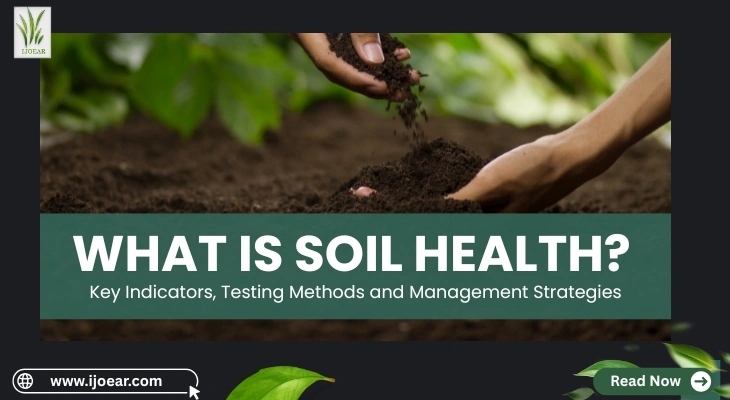
Soil is much more than a layer of dirt beneath our feet. It is a dynamic, living ecosystem that supports plant growth, stores water, cycles nutrients, and sustains billions of microorganisms. Healthy soil is the foundation of productive agriculture, environmental sustainability, and food security.
As concerns about climate change, land degradation, and declining agricultural productivity continue to grow, understanding soil health has become more important than ever. Farmers, gardeners, researchers, and policymakers are increasingly focusing on maintaining and improving soil health to ensure long-term agricultural success.
In this comprehensive guide, we'll explore what soil health is, why it matters, the key indicators used to evaluate it, modern soil testing methods, and practical management strategies that improve soil quality over time. For a broader perspective on soil and climate resilience, explore our guide on regenerative agriculture: mechanisms in carbon sequestration and soil health.
What is Soil Health?
Soil health refers to the soil's ability to function as a living ecosystem that sustains plants, animals, humans, and the environment. It is the capacity of soil to perform essential functions while maintaining its biological productivity and environmental quality.
Healthy soil does much more than support crop roots. It:
- Supplies essential nutrients to plants
- Stores and filters water
- Promotes healthy root development
- Supports beneficial microorganisms
- Reduces erosion
- Sequesters carbon
- Maintains biodiversity
- Improves resilience against drought and flooding
Unlike soil fertility, which primarily focuses on nutrient availability, soil health includes physical, chemical, and biological properties working together.
Why is Soil Health Important?
Maintaining healthy soil offers numerous environmental, agricultural, and economic benefits.
- Improves Crop Productivity: Healthy soils provide balanced nutrition, proper aeration, and sufficient moisture for optimal plant growth. Crops grown in healthy soils often produce higher yields with improved quality.
- Enhances Water Retention: Organic matter-rich soils absorb and retain more water, reducing irrigation requirements and helping crops survive dry conditions. For more on water management, read plant water consumption: Blaney-Criddle vs. Penman-Monteith for pistachio.
- Prevents Soil Erosion: Stable soil aggregates resist erosion caused by rainfall and wind, preserving valuable topsoil.
- Supports Beneficial Soil Organisms: Healthy soils are home to bacteria, fungi, earthworms, nematodes, and insects that naturally recycle nutrients and suppress harmful pathogens.
- Reduces Fertilizer Requirements: Efficient nutrient cycling minimizes dependence on synthetic fertilizers, lowering production costs.
- Mitigates Climate Change: Healthy soils capture atmospheric carbon and store it as organic matter, reducing greenhouse gas concentrations. For more on carbon sequestration, read carbon sequestration in soils: scope in Ph.D. research.

Components of Soil Health
Soil health depends on three interconnected components.
Physical Health
Physical properties determine how well soil supports root growth and water movement. Important characteristics include soil texture, soil structure, bulk density, water infiltration, porosity, and aggregate stability. Good physical health allows roots to grow freely while improving air and water circulation.
Chemical Health
Chemical properties determine nutrient availability and soil reactions. Major chemical indicators include soil pH, electrical conductivity, organic carbon, macronutrients, micronutrients, and cation exchange capacity (CEC). Balanced soil chemistry ensures plants receive nutrients in available forms. For more on managing soil chemistry, see 5 soil fertility strategies for calcareous soils in 2026.
Biological Health
Biological health reflects the activity of living organisms within soil. This includes microbial diversity, earthworm populations, fungal networks, organic matter decomposition, and enzyme activity. Biological activity drives nutrient cycling and supports healthy plant growth.
Key Indicators of Soil Health
Scientists and agronomists evaluate soil health using multiple indicators.
1. Soil Organic Matter (SOM)
Organic matter is one of the most reliable indicators of healthy soil. It consists of plant residues, animal residues, decomposed microorganisms, and humus. Benefits include improved fertility, better moisture retention, enhanced microbial activity, reduced erosion, and improved soil structure. Generally, soils with higher organic matter are healthier and more productive.
2. Soil pH
Soil pH measures acidity or alkalinity. Most agricultural crops perform best between pH 6.0–7.5. Improper pH affects nutrient availability and microbial activity. Low pH may cause aluminum toxicity, poor phosphorus availability, and reduced microbial activity. High pH may reduce availability of iron, zinc, manganese, and copper. For more on pH management, read calcareous soil farming: complete guide to nutrient uptake and crop quality.
3. Soil Structure
Healthy soil contains stable aggregates that improve root penetration, water movement, air exchange, and resistance to erosion. Compacted soils often suffer from poor drainage, reduced root growth, and lower microbial activity.
4. Bulk Density
Bulk density measures soil compaction. High bulk density indicates reduced pore space, limited oxygen, poor water infiltration, and restricted root development. Lower bulk density generally indicates healthier soil.
5. Water Infiltration Rate
Healthy soils absorb rainfall quickly. Benefits include reduced runoff, better groundwater recharge, lower flood risk, and improved drought resistance.
6. Earthworm Population
Earthworms are considered natural indicators of healthy soil. They improve aeration, enhance nutrient cycling, increase organic matter decomposition, and improve soil aggregation. Large earthworm populations often indicate healthy biological activity.
7. Microbial Activity
Billions of microorganisms live in healthy soil. These organisms decompose organic matter, release nutrients, suppress diseases, and improve soil aggregation. Greater microbial diversity usually reflects healthier soils.
8. Nutrient Availability
Healthy soil contains balanced levels of macronutrients (Nitrogen, Phosphorus, Potassium), secondary nutrients (Calcium, Magnesium, Sulfur), and micronutrients (Zinc, Iron, Boron, Copper, Manganese, Molybdenum). Balanced nutrition supports sustainable crop production.
Soil Health Testing Methods
Accurate soil testing helps identify limitations before they affect crop performance.
1. Laboratory Soil Testing
Professional laboratories analyze soil samples for pH, organic carbon, nitrogen, phosphorus, potassium, micronutrients, and electrical conductivity. Laboratory testing provides reliable recommendations for fertilizer and soil amendments.
2. Soil Texture Test
Texture determines the proportion of sand, silt, and clay. Methods include the feel method, jar sedimentation test, and hydrometer analysis. Texture influences water retention, nutrient holding capacity, and drainage.
3. Soil Organic Carbon Testing
Organic carbon testing estimates organic matter content. Common methods include the Walkley-Black method and dry combustion method. Higher organic carbon generally indicates better soil health.
4. Soil Respiration Test
This measures microbial activity by evaluating carbon dioxide released from soil microorganisms. Higher respiration often indicates active biological processes.
5. Infiltration Test
A simple field test measures how quickly water enters the soil. Slow infiltration may indicate compaction, poor aggregation, or surface crusting.
6. Penetration Resistance Test
A soil penetrometer measures compaction by evaluating resistance to root penetration. High resistance suggests the need for soil improvement practices.
7. Earthworm Count
Digging a small soil pit and counting earthworms provides a quick estimate of biological health. Although simple, it remains a useful field indicator.
Best Soil Health Management Strategies
Improving soil health requires consistent management practices rather than one-time interventions.
1. Increase Organic Matter
Adding organic materials improves nearly every aspect of soil health. Examples include compost, farmyard manure, green manure, crop residues, and vermicompost. Benefits include better nutrient supply, improved moisture retention, and increased microbial activity.
2. Practice Crop Rotation
Growing different crops in sequence breaks pest cycles, improves nutrient balance, enhances microbial diversity, and reduces disease pressure. Including legumes helps naturally increase nitrogen availability.
3. Plant Cover Crops
Cover crops protect bare soil between growing seasons. Common cover crops include clover, rye, mustard, oats, and cowpea. Benefits include preventing erosion, improving organic matter, suppressing weeds, and enhancing biodiversity.
4. Reduce Soil Disturbance
Excessive tillage damages soil structure and microbial habitats. Conservation tillage and no-till farming help preserve soil aggregates, reduce erosion, increase carbon storage, and improve water infiltration.
5. Maintain Proper Soil pH
Apply amendments based on soil test results. Examples include lime for acidic soils and sulfur for alkaline soils (where appropriate). Maintaining an optimal pH improves nutrient availability and microbial activity.
6. Balanced Fertilization
Avoid overusing chemical fertilizers. Instead, follow soil test recommendations, use integrated nutrient management, and combine organic and inorganic nutrient sources. Balanced fertilization improves long-term soil productivity.
7. Improve Drainage
Poor drainage leads to oxygen deficiency and root diseases. Solutions include raised beds, drainage channels, organic matter addition, and reduced compaction.
8. Avoid Soil Compaction
Heavy machinery should not be operated on wet soils. Strategies include controlled traffic farming, reduced axle loads, deep-rooted cover crops, and proper grazing management.
9. Encourage Soil Biodiversity
Healthy biological communities can be supported by reducing unnecessary pesticide use, applying compost, growing diverse crops, and maintaining crop residues.
10. Efficient Water Management
Proper irrigation practices prevent waterlogging, salinity buildup, and nutrient leaching. Methods like drip irrigation and scheduling irrigation according to crop needs improve soil sustainability.
Common Threats to Soil Health
Several factors contribute to soil degradation worldwide: excessive tillage, deforestation, overgrazing, soil erosion, salinity, acidification, nutrient depletion, heavy chemical inputs, industrial pollution, and climate change. Recognizing these threats early helps prevent long-term productivity losses.
Benefits of Healthy Soil for Sustainable Agriculture
Healthy soils contribute directly to sustainable farming by increasing crop yields, reducing production costs, improving nutrient-use efficiency, conserving water, enhancing biodiversity, increasing resilience to climate variability, reducing greenhouse gas emissions, and supporting long-term food security. For farmers, investing in soil health is often one of the most cost-effective ways to improve productivity while protecting natural resources.
Future of Soil Health Management
Advances in precision agriculture and digital technologies are changing how soil health is monitored and managed. Farmers can now use soil sensors, satellite imagery, geographic information systems (GIS), remote sensing, and data analytics to make informed decisions about irrigation, fertilization, and crop management. These tools enable more targeted interventions, reduce input waste, and support sustainable farming practices.
At the same time, regenerative agriculture is gaining momentum by emphasizing practices such as reduced tillage, diverse crop rotations, cover cropping, and increased organic matter to rebuild soil function and resilience over the long term. For guidance on publishing research in this field, refer to how to publish agriculture research quickly and efficiently.
Soil health is the cornerstone of productive agriculture, environmental resilience, and sustainable food systems. A healthy soil functions as a living ecosystem that supports plant growth, regulates water, cycles nutrients, and fosters diverse biological communities. By monitoring key indicators such as organic matter, pH, soil structure, microbial activity, and nutrient availability, land managers can identify potential issues before they become serious problems.
Regular soil testing, combined with science-based management practices like crop rotation, cover cropping, organic matter addition, conservation tillage, balanced fertilization, and efficient water management, helps maintain productive soils for future generations. Investing in soil health not only boosts crop performance but also protects ecosystems, conserves natural resources, and strengthens the long-term sustainability of agriculture.
Continue Exploring: Recommended Reads from IJOEAR Blog
📚 You may also find these articles valuable for your research and sustainable agriculture practice:
- Regenerative Agriculture: Mechanisms in Carbon Sequestration and Soil Health — Discover soil health restoration practices for sustainable farming.
- Carbon Sequestration in Soils: Scope in Ph.D. Research — Understand soil carbon dynamics and organic matter management.
- Calcareous Soil Farming: Complete Guide to Nutrient Uptake & Crop Quality — Learn about nutrient management in high-pH soils.
- 5 Soil Fertility Strategies for Calcareous Soils in 2026 — Explore integrated nutrient management approaches.
- Plant Water Consumption: Blaney-Criddle vs. Penman-Monteith for Pistachio — Understand water management for soil health and crop productivity.