Papaya farming has witnessed remarkable expansion in tropical and subtropical regions due to increasing demand for fresh fruit, processed products, and nutraceutical applications. Despite its economic significance, papaya production continues to face several pest-related challenges, among which papaya mealybug (Paracoccus marginatus) remains one of the most destructive. Over the past two decades, this invasive pest has spread rapidly across papaya-growing regions, affecting both commercial farms and smallholder cultivation systems.
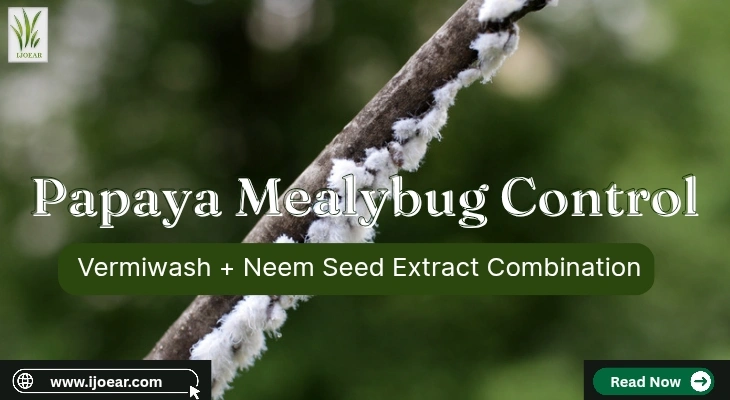
Papaya mealybugs are small, soft-bodied insects covered with white wax-like secretions that make infestations easy to identify. However, their small size often causes growers to overlook the problem during the early stages, allowing populations to multiply rapidly. Once established, mealybugs attack leaves, stems, fruits, and young shoots by sucking plant sap, weakening overall plant health and significantly reducing productivity.
Infested papaya plants commonly show symptoms such as leaf curling, chlorosis, premature fruit drop, stunted growth, distorted fruits, and reduced vigor. In severe infestations, entire orchards may suffer heavy yield losses, making effective pest management essential for maintaining sustainable papaya production.
The challenge becomes even greater because papaya mealybugs reproduce rapidly under warm environmental conditions. Climate variability, prolonged dry seasons, and rising temperatures have further intensified mealybug outbreaks in many agricultural regions, forcing researchers and growers to explore sustainable alternatives to chemical pesticides. For insights on climate impacts on agriculture, read climate change and its impact.
Among various eco-friendly solutions, the combination of vermiwash and neem seed extract has emerged as a promising strategy for suppressing papaya mealybugs while supporting plant health.
Why Chemical-Only Mealybug Control Is Losing Favor
For many years, synthetic insecticides were the primary defense against papaya mealybugs. Farmers relied heavily on chemical sprays to reduce pest populations quickly and protect crop yields. Although these pesticides often provide immediate suppression, long-term dependency has created several challenges.
One of the major concerns is pesticide resistance. Repeated exposure to the same chemical compounds allows mealybugs to develop adaptive mechanisms, gradually reducing pesticide effectiveness. As resistance builds, farmers often increase spray frequency or shift toward stronger formulations, increasing production costs.
Another major issue is ecological disruption. Broad-spectrum pesticides frequently kill beneficial insects that naturally regulate mealybug populations. Predators such as ladybird beetles, lacewings, hoverflies, and parasitic wasps often decline after chemical applications, unintentionally worsening pest outbreaks over time. For more on sustainable pest management, see sustainable pest and disease management.
Environmental concerns also continue to grow. Chemical residues may contaminate soil, water, and surrounding ecosystems. Since papaya fruits are consumed fresh, concerns regarding food safety and pesticide residues remain especially important in domestic and export markets.
These limitations have encouraged growing interest in sustainable pest management strategies capable of balancing productivity with environmental responsibility.

Understanding Vermiwash and Its Role in Pest Management
Vermiwash is a liquid extract generated through vermicomposting systems, where earthworms break down organic matter and produce nutrient-rich substances. Traditionally used as a liquid biofertilizer, vermiwash contains several beneficial components, including plant growth hormones, enzymes, beneficial microorganisms, amino acids, vitamins, and micronutrients.
While vermiwash is widely recognized for improving plant growth and soil fertility, researchers increasingly acknowledge its role in strengthening plant defense systems against pests.
Papaya plants treated with vermiwash often demonstrate improved vigor, healthier foliage, and better nutrient absorption. Healthy plants generally tolerate pest attacks more effectively and recover faster from infestation-related stress.
Several studies suggest that vermiwash may also create unfavorable conditions for pest establishment through microbial activity and biochemical compounds present on plant surfaces. Although vermiwash alone may not completely eliminate papaya mealybugs, it significantly contributes to improving plant resilience and supporting long-term crop health. For more on soil health and organic amendments, explore carbon sequestration in soils.
Neem Seed Extract as a Natural Weapon Against Mealybugs
Neem seed extract has become one of the most widely studied botanical pest management tools in sustainable agriculture. Derived from the seeds of the neem tree (Azadirachta indica), neem extract contains biologically active compounds known for their insecticidal and repellent properties.
Among these compounds, azadirachtin is particularly important due to its ability to interfere with insect growth and behavior. Unlike conventional pesticides that often kill insects immediately, neem compounds affect mealybugs through multiple biological mechanisms.
These include:
- Feeding Deterrence: Neem compounds reduce feeding activity in mealybugs, limiting nutrient extraction from papaya plants.
- Growth Disruption: Neem interferes with hormonal systems responsible for molting and insect development.
- Reduced Reproduction: Adult insects exposed to neem often show lower reproductive capacity, reducing future pest populations.
- Repellent Effects: Neem discourages pest colonization, helping prevent further infestation.
This gradual but multi-dimensional action makes neem particularly attractive for sustainable pest management systems. For more on neem-based pest control, read biopesticides for cotton 2026: neem, Bacillus & larval mortality.
Why Vermiwash and Neem Seed Extract Work Better Together
The increasing popularity of vermiwash and neem seed extract combinations comes from their complementary roles in pest management. Neem primarily targets the pest directly, while vermiwash strengthens the host plant. This creates a balanced and more sustainable system of pest suppression.
When applied together, the combination offers several advantages:
- Direct Suppression of Mealybugs: Neem seed extract weakens mealybug populations by disrupting feeding, growth, and reproduction.
- Improved Plant Recovery: Vermiwash helps papaya plants recover faster from sap-sucking damage by supporting nutrient availability and physiological health.
- Better Plant Immunity: Healthier plants become less vulnerable to repeated pest attacks.
- Reduced Pest Recolonization: Neem's repellent properties help discourage fresh infestations.
- Ecological Compatibility: The combination generally causes less disruption to beneficial insects compared to synthetic pesticides. For insights on nature-based pest control, explore nature's own pest control: a sustainable revolution in IPM.
Rather than functioning as a quick-fix solution, vermiwash and neem extract work progressively to create healthier crop systems capable of resisting pest outbreaks naturally.
What Recent Field Observations Suggest
Field observations and experimental studies conducted between 2023 and 2026 have reported encouraging outcomes from vermiwash and neem-based interventions in papaya farming.
Researchers monitoring papaya orchards treated with vermiwash and neem seed extract combinations observed several improvements over repeated application cycles.
Common observations included reduced mealybug colony density, lower honeydew accumulation, decline in black sooty mold development, better leaf retention, improved vegetative growth, and healthier fruit development.
The reduction in honeydew is especially important because excessive honeydew encourages fungal growth that blocks sunlight absorption and interferes with photosynthesis. Many growers also reported improved plant appearance and better overall crop vigor after repeated applications. However, researchers emphasize that successful outcomes depend on proper timing, dosage, and consistency.
Preparing Vermiwash and Neem Seed Extract Mixtures
The effectiveness of this combination often depends on preparation quality. Vermiwash is usually diluted before foliar spraying to avoid excessive concentration and ensure proper leaf absorption.
Neem seed extract is commonly prepared through a soaking and filtration process:
- Neem seeds are dried and crushed.
- The crushed material is soaked in water for several hours.
- The liquid is filtered to remove particles.
- The filtered extract is mixed with diluted vermiwash.
In many farming systems, growers also add mild soap solutions to improve spray adherence and leaf coverage. Uniform coverage is important because papaya mealybugs frequently hide beneath leaves, near stems, and in fruit clusters. Poor spray coverage often reduces effectiveness.
Timing Makes a Significant Difference
One of the most overlooked factors in mealybug management is timing. Many farmers begin treatment only after infestations become severe. By that stage, pest colonies are already well established and more difficult to suppress.
Younger mealybug stages tend to be more vulnerable to neem compounds than mature adults protected by thick waxy coatings.
Researchers often recommend:
- Early Monitoring: Frequent inspection of leaves and young shoots helps detect infestations before populations explode.
- Preventive Application: Applying sprays during early infestation stages generally improves outcomes.
- Repeated Spraying: Botanical treatments work gradually and often require multiple applications over time.
- Cooler Spray Periods: Morning and evening sprays usually improve efficacy because sunlight and high temperatures can reduce active compound persistence.
Consistency remains one of the most important factors influencing success. Unlike chemical pesticides that may show visible results within days, vermiwash and neem combinations often require patience and repeated use.
Supporting Natural Predators in Papaya Ecosystems
Another major strength of this approach lies in its compatibility with biological control organisms. Healthy agricultural ecosystems naturally contain predators capable of suppressing mealybug populations.
These beneficial insects include ladybird beetles, green lacewings, hoverflies, and parasitic wasps. Heavy pesticide use frequently destroys these natural allies, forcing farmers into repeated chemical dependence.
Neem-based treatments used at moderate concentrations generally have lower ecological disruption compared to broad-spectrum insecticides. Meanwhile, vermiwash promotes healthier microbial environments that support overall ecological balance. This compatibility makes vermiwash and neem combinations highly suitable for integrated pest management systems. For more on biological control and resistance management, read antimicrobial resistance in agricultural systems.
Economic Benefits for Smallholder and Sustainable Farmers
Rising pesticide prices continue to place financial pressure on farmers worldwide. Repeated chemical spraying often increases production costs due to frequent purchases, resistance-related inefficiency, labor expenses, and equipment maintenance.
In contrast, vermiwash and neem-based treatments can be more affordable in regions where resources are locally available. Neem trees grow abundantly in many tropical regions, while vermiwash production can be integrated into farm-based composting systems. This reduces dependency on expensive external agricultural inputs and supports circular farming systems. For smallholder farmers, this affordability may significantly improve long-term profitability.
Challenges That Still Need Attention
Despite growing optimism, vermiwash and neem seed extract combinations are not perfect solutions. Several practical limitations remain.
- Slower Results: Botanical treatments generally act gradually and may not provide immediate suppression during severe outbreaks.
- Weather Sensitivity: Rainfall can wash away foliar sprays, reducing effectiveness.
- Variable Preparation Quality: Inconsistent extraction methods may affect results.
- Heavy Infestations: Extremely severe mealybug outbreaks may still require supplementary interventions.
Researchers continue exploring ways to improve consistency through enhanced formulations and combined biological approaches. Some studies are now examining whether microbial biocontrol agents like Beauveria bassiana can further strengthen vermiwash and neem-based pest management.
Where Sustainable Mealybug Control Is Heading
Agriculture is gradually moving away from complete dependence on synthetic pesticides and toward integrated ecological solutions.
Modern pest management increasingly combines botanical extracts, biological control agents, soil health improvement, pest monitoring systems, and precision farming technologies.
The growing scientific interest in vermiwash and neem seed extract reflects this broader transition. Rather than simply killing pests, sustainable systems aim to strengthen crop resilience, preserve beneficial organisms, and maintain ecological stability.
For papaya growers dealing with recurring mealybug problems, the vermiwash and neem seed extract combination offers more than an alternative pest spray. It represents a practical step toward farming systems that prioritize long-term productivity without sacrificing environmental balance. For guidance on publishing research in this field, refer to how to publish agriculture research quickly and efficiently.
Continue Exploring: Recommended Reads from IJOEAR Blog
📚 You may also find these articles valuable for your research and sustainable agriculture practice:
- Biopesticides for Cotton 2026: Neem, Bacillus & Larval Mortality — Explore neem-based and microbial biopesticides for effective pest control.
- Sustainable Pest and Disease Management — Comprehensive strategies for eco-friendly pest control across cropping systems.
- Nature's Own Pest Control: A Sustainable Revolution in IPM — Discover biological and ecological approaches to pest suppression.
- Neem vs. Bacillus vs. Jatropha: Which Biopesticide Works Best for Cotton? — Compare top biopesticide options for effective pest management.
- Chemical vs. Biological Pest Control: 2026 Efficacy Data for Cotton — Understand the efficacy comparison between chemical and biological methods.