Feeding the Future in a World of Urbanization
With the world's urban population swelling to an estimated over 70% by 2050, the traditional paradigm of food production is under unprecedented pressure. The traditional agriculture paradigm—based on expansive land, unreliable climate, and cyclical seasons—is increasingly less tenable to meet the demands of high-density, fast-growing cities.
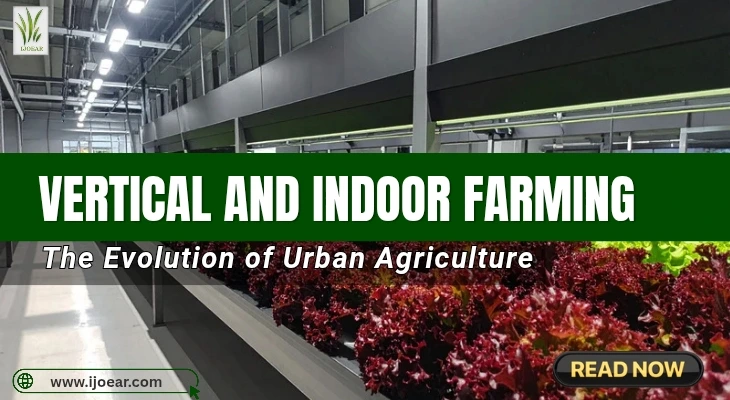
There is an urgent requirement for local, sustainable, and resilient food systems. Indoor and vertical farming systems grow food in vertically stacked layers within controlled conditions. By utilizing unused urban infrastructure such as warehouses, rooftops, basements, and even shipping containers, these farms are converting urban landscapes into food production facilities.
As climate change, water scarcity, and supply chain disruptions threaten global food security, vertical and indoor farming offer an advanced, sustainable alternative acceptable to the present urban lifestyle. For a broader perspective on sustainable farming trends, explore our guide on the future of sustainable farming: trends and challenges.
1. The Emergence of Controlled Environment Agriculture (CEA)
At the foundation of vertical and indoor agriculture is Controlled Environment Agriculture (CEA). This revolutionary method is reshaping food production in urban and climate-affected environments. These systems are engineered to carefully control essential environmental parameters like temperature, humidity, and CO₂ levels to facilitate uniform, high-quality crop production throughout the entire year.
Compared to traditional open-field farming—which is subjected to seasonality, pests, and harsh weather conditions—CEA offers predictable yield and maximum space utilization, often generating 20–30 times more per square foot than field cultivation.
Technology Behind the Control
1. HVAC and Climate Control Systems
CEA facilities employ efficient HVAC systems to regulate air temperature, humidity, and CO₂ levels. Priva (Netherlands) and Argus Controls (Canada) are leading providers of whole-climate-control systems for massive vertical farms. These systems never expose plants to heatwaves, frost, or drought. According to a 2023 report by AgFunder, efficient HVAC in vertical farms can conserve energy up to 25% and lower total operating costs substantially.
2. LED Grow Lights and Optimal Light
Artificial lighting in vertical farming has advanced profoundly with spectrum-controllable LED lights. LEDs emit specific wavelengths optimized for different stages of plant growth—from germination to flowering. Precision-controlled LED systems for indoor cultivation are offered by corporations such as Heliospectra (Sweden) and Signify (Philips Lighting Division, Netherlands). A 2024 Wageningen University study demonstrated that tailor-made "light recipes" raised lettuce yield by 35% and saved 18% of energy compared to standard LED installations.
3. Nutrient and Water Delivery Automation
Soilless systems—namely hydroponics, aeroponics, and aquaponics—enable automatic and accurate nutrient delivery through irrigation lines or misting nozzles. The three most commonly used soilless systems in hydroponic farms are nutrient film technique (NFT), deep water culture (DWC), and ebb and flow. Soilless systems from Growlink (U.S.) and CropKing (U.S.) allow farms to adjust pH, electrical conductivity (EC), and nutrient concentrations for each crop stage, helping plants fully utilize nutrient solutions without waste.
4. AI and IoT Integration
Today's CEA facilities are increasingly powered by Artificial Intelligence (AI) and Internet of Things (IoT) sensors that monitor plant health, nutrient uptake, light, and microclimate factors in real-time. In one case study, farmers using IoT-capable farms reduced crop losses by as much as 40% by detecting stress factors 72 hours earlier than human observation. For more on AI applications in agriculture, read AI-powered phenotyping and genomics integration.
Real-World Applications of CEA
Kalera (Orlando, Florida) operates some of the most sophisticated vertical farms in the U.S., employing full-stack CEA systems that use more than 97% less water than conventional farming and no chemical pesticides.
Badia Farms in the UAE uses CEA and hydroponics to produce microgreens and herbs within climate-controlled facilities, surmounting one of the driest environments on the planet.
In Japan, Spread Co., Ltd. operates "Techno Farm Keihanna," a global leader in automated vertical farming, growing more than 30,000 heads of lettuce per day with minimal human intervention due to full robotics integration.
Global research centers are at the forefront of pioneering CEA. The MIT Media Lab Open Agriculture Initiative explores open-source CEA systems using "Food Computers" that could potentially be customized for different environments globally. The Fraunhofer Institute (Germany) is piloting vertically farmed modules using waste heat and CO₂ from nearby industrial plants to feed CEA greenhouses, raising sustainability and resource recycling.
2. Soil-Free Cultivation: The Basics of Indoor Farming
Hydroponics
Hydroponics is soilless cultivation where plants receive a water-based nutrient solution. Roots are submerged in or exposed to the nutrient solution with tight control, achieving up to 95% reduction in water use compared to traditional agriculture. Crops can be grown using hydroponics at any scale, from countertop to commercial operations utilizing shipping containers or warehouses. Hydroponics accommodates crops ranging from lettuces and greens to herbs and fruits such as strawberries and tomatoes.
Aeroponics
Aeroponics suspends plant roots in air and mists them with a fine aerosol spray of nutrient solution. This method provides even greater oxygen supply to roots, resulting in faster growth and more efficient nutrient uptake in most applications. Because aeroponics uses water very efficiently compared to hydroponics, it is ideal for water-scarce locations. Its high efficiency and low footprint make aeroponics the ideal system for many new urban agriculture projects.
Aquaponics
Aquaponics combines hydroponics with aquaculture (fish farming in tanks). Fish waste nourishes the plants, and plants purify the water for fish in a closed-loop, mutualistic symbiotic system. Aquaponics reduces synthetic fertilizer usage while offering sustainable urbanization potential. Its scalability is increasingly recognized. For related water conservation strategies, see water conservation and smart irrigation systems.

3. Technological Principles of Contemporary Vertical Farming
Spectrum-Tunable LED Lighting
LED grow lights are the backbone of contemporary vertical farming, fabricating natural sunlight to suit plant requirements. Spectrum-tunable LED lighting allows plant lighting prescriptions that maximize photosynthesis at various growth stages, from seedling emergence to harvest. Since lighting is one of the most significant energy expenses for indoor farms, continual improvements in energy-efficient LED technology remain important for both environmental stewardship and economic viability.
Automated Environmental Control Systems
Ambient variables such as temperature, humidity, day-night cycles, and carbon dioxide levels are routinely managed by AI-enabled environmental control systems. These "smart" systems simplify labor intensity, produce uniformity, and enable microclimate fine-tuning. Today's advanced farms are programmed to incorporate weather forecasts and power costs, providing dynamically responsive control that lowers energy costs and improves resilience.
Predictive Analytics and AI Integration
IoT sensor technology provides real-time agricultural data input into cloud-based systems, while AI programs analyze data to make predictive analytics about plant health, nutrient uptake, and disease progression. Predictive analytics foresee problems, optimize harvests, and guide plant growth cycles. Predictive modeling promotes 15–25% higher yield and reduces water and fertilizer application through timely harvesting guidance based on up-to-date analysis.
4. Environmental and Economic Advantages
Water and Resource Efficiency
Vertical farms consume 90–98% less water than traditional farms. Closed systems recycle nutrients and water, minimizing runoff and preventing fertilizer contamination—a major source of waterway eutrophication. Furthermore, indoor systems significantly reduce pesticide use, with some designs being completely pesticide-free.
Efficient Use of Space and Yields
Vertical farms are multi-layered indoor systems that create high crop density within small square footage. They can produce 10 to 100 times more food per square foot compared to conventional farming methods. Vertical farms work well with leafy greens like kale and lettuce, reducing crop cycles by 50% compared to conventional farming.
Year-Round Production
Indoor crops are grown under controlled light and climate for all 365 days of the year. This makes crops highly resilient against climate variability and surprises curtailed by climate change, providing production certainty. Year-round food production is especially valuable when considering climate patterns featuring drought, storms, and extremes of heat and cold. Learn more about climate-resilient crops ensuring food security.
Reduced Food Miles and Emissions
Vertical farms minimize food miles and emissions by growing food closer to consumption. This benefits the environment through reduced pollution while also resulting in higher nutritional values for fruits and vegetables and reduced food waste. A 2023 Columbia University study compared transportation distances for food produced at urban vertical farms to conventionally produced foods. Foods from urban vertical farms traveled more than 90% fewer miles and had a 77% lower carbon footprint per unit of leafy greens.
Contribution to Society and Urban Development
Job Creation and Skills Development: Indoor agriculture is creating new job opportunities in data science, horticulture, software development, robotics, and logistics. As the vertical farming industry grows, educational institutions are constructing programs in vertical farming and agri-tech to train the next generation of workers. The FAO projects that vertical farming may create up to 12 million new jobs worldwide by 2030.
Reurbanization: Cities are transforming vacant warehouses and abandoned facilities into urban vertical farms. This activates urban areas that would otherwise become waste spaces, replacing blight while redeeming vacant buildings' value through productive use. Urban farms are being linked to schools, hospitals, and community centers in some cities to provide fresh food while offering educational experiences.
5. Current Challenges Confronting Vertical Farming
High Startup and Operating Costs
Constructing an indoor farm is capital-intensive. Expenditures involve lighting systems, climate controls, real estate, automation, and water management technology. Although operating costs decline over time, high initial investment remains a hurdle for many startups. Alternative financing models—such as equipment leasing or public-private partnerships—are helping to address this problem.
Energy Consumption
The power requirements of lighting, air conditioning, heating, and automation are significant, particularly in colder countries. Even though LED bulbs are now more efficient, most farms continue to depend heavily on electricity. To address this, some farms are adopting solar panels, wind turbines, and battery banks to minimize grid dependency and carbon footprint. For insights on renewable energy integration, see exploring renewable energy and sustainability.
Skills Gap and Workforce Training
Highly technological vertical farming requires multidisciplinary skills. Shortages of specialists in software, engineering, and controlled plant science may limit scalability. Private and government institutions are now investing in upskilling initiatives and agri-tech incubators to fill this gap.
Limited Crop Variety
Currently, most vertical farms focus on fast-growing, high-value crops such as leafy greens, herbs, and microgreens. Major crops like wheat, corn, and root vegetables have not yet transitioned to vertical agriculture due to capital requirements, nutrient efficiency in spatial footprints, and ongoing farming method development. However, research progress in plant breeding, lighting types, and substrates will facilitate adoption for more crops in vertical and alternative farms.
6. Global Growth and Illustrative Examples
Singapore: A Leader in Urban Agriculture
Singapore has less than 1% arable land. Driven by necessity, Singapore is uniquely positioned for experimental ventures into urban agriculture. Singapore adopted the "30 by 30" program, aiming to produce 30% of locally consumed food by 2030. As of 2025, more than 30% of leafy greens are produced in vertical agriculture facilities.
The state promotes this transition through over SGD $144 million invested in agri-tech R&D, regulatory fast-tracking for urban farming activities, and grants promoting rooftop and warehouse conversions. Firms such as Sustenir and Sky Greens employ cutting-edge hydroponic towers to grow crops year-round using 95% less water than conventional farms.
The Netherlands: Agri-Tech Powerhouse
The Netherlands is a global agri-tech powerhouse and the second-largest exporter of agricultural goods globally—due primarily to agri-tech and vertical farming innovation. Dutch vertical greenhouses and farms use 90% less water than normal farms globally.
PlantLab, Growy, and Urban Crop Solutions are shipping modular vertical farms and lighting solutions throughout Europe, Asia, and the Middle East. Wageningen University & Research, a pioneer in agricultural innovation worldwide, actively encourages vertical farm startups with research and collaboration. A fully mechanized vertical farm by PlantLab can yield 20 times more food per square meter than an open field farm.
United States: Scaling Commercial Indoor Farms
Vertical farming in the U.S. has transitioned from pilot projects to large commercial use. Several tech companies are changing food production and delivery:
Plenty has one of the globe's most sophisticated vertical farms in Compton, California, producing over 4.5 million pounds of greens annually and supplying over 100 grocery stores in Southern California.
Bowery Farming, valued at over $2.3 billion, employs a proprietary operating system ("BoweryOS") to track and automate manufacturing across several cities.
AeroFarms, a New Jersey-based firm, operates a vertical farm producing up to 2 million pounds of leafy greens annually on just 70,000 square feet.
A USDA report indicates that U.S. urban indoor farms can reduce food transportation emissions by up to 80% depending on location and energy source.
India: Innovation in Climate Resilient Agriculture
India is experiencing rapid adoption of vertical and hydroponic agriculture in major urban centers including Mumbai, Bengaluru, Chennai, and Hyderabad—especially by startups and agri-entrepreneurs.
Current trends include: ICAR-IIVR (Indian Institute of Vegetable Research) developed a variety of Kalmi Saag (Kashi Manu) that thrives in hot, dry, non-aquatic conditions—ideal for vertical or rooftop farming. The Indian vertical farming market is expected to grow at a CAGR of 24.5% during the forecast period of 2022–2030. Startups such as Agricool, UrbanKisaan, and Farmiz are creating home kits and container farms custom-made for Indian consumers and climate. Rooftop hydroponic farms in Bengaluru are already producing over 150 kg per month of greens from plots of some 600 square feet, utilizing 90% less water than traditional soil-based farming. For more on Indian agricultural research, refer to top research institutions in India 2025 NIRF rankings.
7. Innovation and the Future
Blockchain for Traceability
Customers demand transparency in food systems. Blockchain technology provides farms visibility into the journey of produce from seed to shelf, secures quality and food safety protocols, and enables consumer trust.
Mobile Vertical Farms
Mobile container farms are bringing healthy food to schools, hospitals, and rural areas, assisting with food insecurity and agricultural education for communities.
Carbon Footprint Tracking
New carbon-accounting systems are being employed to measure and minimize emissions associated with each gram of produce. Farms can now coordinate activities with local and national sustainability objectives.
AI-Powered Robotics and Automation
Robotics-based solutions are being developed to seed, tend, and harvest increasingly. Autonomous technology has already enabled some indoor farms to save more than 80% on labor costs. For insights on agricultural robotics, read agri-robotics 2025: autonomous machines transforming modern agriculture.
Rethinking Urban Centers with Agriculture
Vertical and indoor farming represent a paradigm shift in how we think about food, cities, and sustainability. As more people reside in urban settings and as societal expectations pressure international food systems, these farms offer a means of feeding people locally, decreasing waste, and reducing the environmental impacts of farming on land.
When monetized through strategic investments in technology, policy, and education, vertical farming has the potential to become part of our global food system—supporting jobs, invigorating cities, and feeding communities.
For researchers, students, entrepreneurs, and policymakers, the urban agriculture revolution is not only fertile ground but also a prime solution for a more sustainable food system. For a related perspective on urban green infrastructure, see latest research on urbanization and green infrastructure.