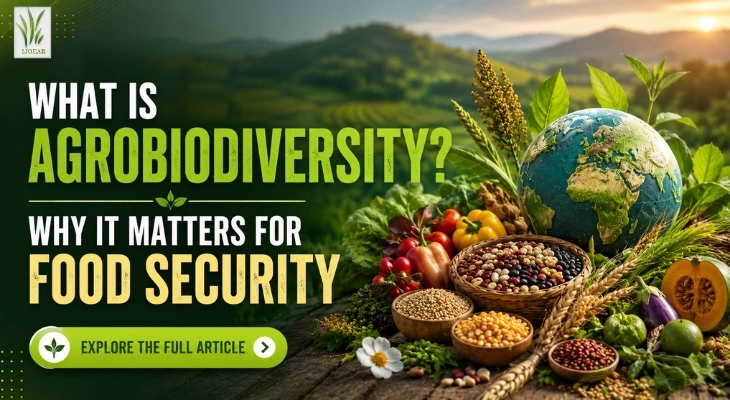
Agriculture depends on far more than cultivated crops and domesticated animals. Behind every productive farm lies a rich diversity of plants, animals, microorganisms, and ecosystems that work together to sustain food production. This biological wealth, known as agrobiodiversity, plays a vital role in maintaining resilient agricultural systems, supporting livelihoods, and ensuring global food security.
As climate change, habitat loss, intensive farming, and population growth continue to threaten agricultural resources, preserving agrobiodiversity has become increasingly important. Diverse farming systems are generally better equipped to withstand environmental stress, resist pests and diseases, and provide nutritious food while protecting natural ecosystems.
For researchers, policymakers, farmers, and agricultural professionals, understanding agrobiodiversity is essential for designing sustainable farming systems and strengthening food security in the face of global challenges.
This comprehensive guide explains what agrobiodiversity is, its components, importance, benefits, threats, conservation strategies, and its critical role in achieving sustainable agriculture and food security. For a broader perspective on biodiversity in agriculture, explore our guide on biodiversity conservation research: latest innovations shaping the future.
What is Agrobiodiversity?
Agrobiodiversity, also known as agricultural biodiversity, refers to the variety and variability of plants, animals, microorganisms, and genetic resources that are directly or indirectly used in agriculture and food production. It also includes the ecosystems and ecological processes that support farming systems.
Agrobiodiversity encompasses:
- Crop diversity
- Livestock diversity
- Fish and aquatic species
- Forest resources used in agriculture
- Pollinators
- Soil microorganisms
- Beneficial insects
- Genetic diversity within species
- Agricultural landscapes and ecosystems
Unlike general biodiversity, agrobiodiversity focuses specifically on biological resources that contribute to agriculture, food production, and rural livelihoods.
Why is Agrobiodiversity Important?
Agrobiodiversity provides the foundation for sustainable food systems. It improves agricultural resilience, enhances ecosystem services, and supports the production of nutritious food under changing environmental conditions.
Its importance includes:
- Strengthening food security
- Improving nutritional diversity
- Conserving genetic resources
- Enhancing resilience to climate change
- Supporting sustainable agriculture
- Increasing farm productivity
- Reducing pest and disease risks
- Protecting ecosystem health
Healthy agricultural systems depend on biological diversity at every level. For more on sustainable agriculture, read what is sustainable agriculture? principles, practices, and importance.

Components of Agrobiodiversity
Agrobiodiversity consists of several interconnected components.
1. Genetic Diversity
Genetic diversity refers to the variation within plant and animal species. Examples include different rice varieties, wheat cultivars, indigenous livestock breeds, and traditional fruit varieties. High genetic diversity enables breeders to develop crops with improved resistance to drought, diseases, pests, and changing climate conditions. For more on genetic diversity in crops, read engineering the future of crops: modern plant breeding through QTL analysis and CRISPR innovation.
2. Species Diversity
Species diversity includes the variety of crops, livestock, trees, fish, insects, and microorganisms found within agricultural systems. Examples include cereals, pulses, fruits, vegetables, livestock species, pollinator insects, soil fungi, and nitrogen-fixing bacteria. Greater species diversity contributes to ecosystem stability and productivity.
3. Ecosystem Diversity
Agricultural landscapes include diverse ecosystems that support farming. Examples include croplands, pastures, agroforestry systems, wetlands, home gardens, and forest-agriculture interfaces. These ecosystems provide valuable services such as pollination, water regulation, and nutrient cycling. For more on agroforestry, read agroforestry and intercropping systems.
4. Functional Diversity
Functional diversity refers to the different ecological roles played by organisms. Examples include pollination, biological pest control, nutrient recycling, organic matter decomposition, soil formation, and water filtration. These functions maintain productive and sustainable farming systems.
The Role of Agrobiodiversity in Food Security
Food security depends on stable, resilient, and productive agricultural systems. Agrobiodiversity contributes to all four dimensions of food security: availability, access, utilization, and stability.
Food Availability
Diverse crops and livestock improve agricultural productivity and reduce the risk of complete crop failure. Farmers growing multiple crops are often less vulnerable to pests, diseases, and adverse weather conditions.
Food Access
Agrobiodiversity provides farmers with multiple sources of income through diversified agricultural production. Income diversification improves households' ability to purchase nutritious food.
Food Utilization
A diverse food system supports healthier diets. Growing a wide variety of crops increases access to vitamins, minerals, protein, dietary fiber, and healthy fats. Dietary diversity is essential for preventing malnutrition. For more on nutrition, read biofortified crops: fighting malnutrition with smart plant breeding.
Food Stability
Agricultural diversity improves resilience against climate change, drought, floods, pest outbreaks, and market fluctuations. This helps maintain a stable food supply throughout the year. For more on climate resilience, read climate-resilient crops: ensuring food security in a changing climate.
Benefits of Agrobiodiversity
1. Climate Change Adaptation: Diverse farming systems recover more effectively from extreme weather events. Climate-resilient crop varieties and indigenous livestock breeds often tolerate drought, heat stress, flooding, and salinity.
2. Improved Soil Health: Crop diversity and beneficial soil organisms improve soil fertility, organic matter, nutrient cycling, water retention, and soil structure. Healthy soils support long-term agricultural productivity. For more on soil health, read what is soil health? key indicators, testing methods, and management strategies.
3. Natural Pest and Disease Control: Biodiverse farms often experience fewer pest outbreaks because beneficial insects and natural predators help regulate pest populations. This reduces dependence on chemical pesticides. For more on natural pest control, read nature's own pest control: a sustainable revolution in integrated pest management.
4. Enhanced Pollination: Pollinators such as bees, butterflies, birds, and other beneficial insects increase crop productivity and improve fruit and seed production. Protecting pollinator diversity is essential for many food crops.
5. Better Nutritional Security: Diversified farming systems produce a wider variety of nutritious foods. This supports balanced diets and reduces micronutrient deficiencies.
6. Sustainable Livelihoods: Farm diversification provides multiple income sources, reducing financial risks for farming households.
7. Ecosystem Resilience: Biologically diverse ecosystems recover more quickly after disturbances and continue providing essential ecosystem services.
Threats to Agrobiodiversity
Despite its importance, agrobiodiversity faces numerous challenges.
- Climate Change: Changing temperatures and rainfall patterns threaten many traditional crop varieties and livestock breeds.
- Intensive Agriculture: Monoculture farming often replaces diverse agricultural systems with a limited number of high-yield crop varieties.
- Habitat Loss: Urbanization, deforestation, and land-use change reduce habitats for pollinators, beneficial insects, and wildlife.
- Overuse of Agrochemicals: Excessive pesticide and fertilizer use can harm soil organisms, pollinators, and aquatic biodiversity.
- Genetic Erosion: Traditional crop varieties and indigenous livestock breeds are increasingly replaced by uniform commercial varieties, reducing genetic diversity.
- Invasive Species: Non-native pests and invasive plants can disrupt agricultural ecosystems and reduce native biodiversity.
Agrobiodiversity Conservation Strategies
Protecting agrobiodiversity requires coordinated efforts from farmers, researchers, governments, and communities.
In Situ Conservation
Conserving biodiversity within its natural agricultural environment. Examples include traditional farming systems, on-farm conservation, community seed banks, and indigenous farming practices.
Ex Situ Conservation
Protecting genetic resources outside their natural habitats. Examples include seed banks, gene banks, botanical gardens, cryopreservation, and livestock breeding centers.
Sustainable Farming Practices
Practices that support biodiversity include crop rotation, agroforestry, organic farming, cover cropping, integrated pest management, and mixed farming.
Participatory Plant Breeding
Researchers and farmers collaborate to develop crop varieties adapted to local conditions while maintaining genetic diversity.
Policy Support
Governments can strengthen agrobiodiversity through conservation policies, incentives for sustainable farming, biodiversity-friendly certification, research funding, and farmer education programs.
Agrobiodiversity Research Approaches
Researchers study agrobiodiversity using diverse scientific methods.
Field Surveys: Researchers document crop varieties, livestock breeds, and associated biodiversity across farming landscapes.
Genetic Analysis: DNA-based techniques assess genetic variation within crop and livestock populations.
Ecological Studies: Researchers investigate relationships among species, ecosystems, and agricultural productivity.
Socioeconomic Research: Studies examine farmer knowledge, traditional practices, market influences, conservation incentives, and adoption of biodiversity-friendly farming.
Geographic Information Systems (GIS) and Remote Sensing: Spatial technologies help monitor land-use change, habitat diversity, vegetation cover, and agricultural landscapes.
Participatory Research: Farmers actively contribute to research through field trials, community conservation initiatives, and local knowledge sharing.
Agrobiodiversity and Sustainable Agriculture
Sustainable agriculture relies heavily on biological diversity to maintain productive farming systems. Diverse crops, livestock, beneficial insects, soil microorganisms, and agroecosystems improve resilience while reducing dependence on synthetic inputs. By promoting ecological balance, agrobiodiversity supports sustainable resource management and long-term agricultural productivity.
Agrobiodiversity and Climate Change Mitigation
Biodiverse farming systems contribute to climate change mitigation through increased carbon sequestration, improved soil health, reduced chemical inputs, enhanced ecosystem resilience, and sustainable land management. Agroforestry and diversified farming systems also store more carbon than simplified agricultural landscapes. For more on climate change mitigation, read carbon sequestration in soils: scope in Ph.D. research.
Future of Agrobiodiversity Research
Emerging technologies are expanding opportunities for agrobiodiversity research.
Key research areas include genomics and molecular breeding, artificial intelligence in agriculture, digital biodiversity monitoring, precision agriculture, climate-resilient crop development, microbiome research, big data analytics, and ecosystem modeling. These innovations will help researchers better understand and conserve agricultural biodiversity while supporting resilient food systems. For guidance on publishing research in this field, refer to how to publish agriculture research quickly and efficiently.
Agrobiodiversity is a cornerstone of sustainable agriculture and global food security. By preserving the diversity of crops, livestock, microorganisms, and ecosystems, it strengthens agricultural resilience, improves nutrition, supports rural livelihoods, and enhances the ability of farming systems to adapt to climate change.
Protecting agrobiodiversity requires integrated conservation strategies, scientific research, supportive policies, and active participation from farming communities. As environmental and food system challenges continue to grow, investing in agrobiodiversity will remain essential for building resilient, productive, and sustainable agricultural systems capable of feeding future generations.
Continue Exploring: Recommended Reads from IJOEAR Blog
📚 You may also find these articles valuable for your research and sustainable agriculture practice:
- Biodiversity Conservation Research: Latest Innovations Shaping the Future — Explore cutting-edge approaches to preserving genetic and ecosystem diversity.
- What is Sustainable Agriculture? Principles, Practices, and Importance — Understand the foundations of sustainable farming.
- Agroforestry and Intercropping Systems: A Practical and Research-Oriented Guide — Explore design principles for integrating trees and crops in sustainable farming systems.
- Climate-Resilient Crops: Ensuring Food Security in a Changing Climate — Discover breeding and management strategies for climate adaptation.
- Carbon Sequestration in Soils: Scope in Ph.D. Research — Understand soil carbon dynamics and climate mitigation potential.