Rice is one of the most widely consumed staple foods in the world, yet it is often criticized for its relatively low protein content and limited amino acid profile. Improving rice protein quality is therefore a key goal in agronomy and crop nutrition research. Among the most studied nutrients influencing rice growth and nutritional composition are nitrogen, zinc, and iron.
Each of these nutrients plays a distinct physiological role in plant metabolism, but their impact on protein synthesis and grain quality differs significantly. Understanding their comparative effects helps farmers and agronomists optimize fertilization strategies for higher-quality rice production. For a broader perspective on rice nutrition management, explore our guide on rice nutrition management 2026: integrated nitrogen, Fe and Zn for higher protein yield.
Role of Nutrients in Rice Protein Formation
Protein synthesis in rice plants depends on metabolic pathways that require both macro and micronutrients. While nitrogen is a primary building block of amino acids, micronutrients like zinc and iron act as enzymatic cofactors that regulate protein metabolism.
The efficiency of protein formation is therefore influenced by nutrient availability, balance, and uptake efficiency.
Nitrogen: The Primary Driver of Rice Protein Content
Nitrogen is the most important nutrient for protein synthesis in rice.
How nitrogen works:
- It is a fundamental component of amino acids
- It supports chlorophyll formation and photosynthesis
- It enhances vegetative growth and biomass production
- It directly increases grain protein concentration
When nitrogen availability is adequate, rice plants produce more amino acids, leading to higher protein accumulation in grains.
Impact on rice protein:
- Strong positive effect on total protein content
- Improves grain filling and yield
- Enhances overall plant vigor
However, excessive nitrogen can lead to lodging (weak stems), delayed maturity, and reduced grain quality if unbalanced with other nutrients.

Zinc: The Enzyme Activator for Protein Metabolism
Zinc is a crucial micronutrient that indirectly influences protein synthesis.
How zinc works:
- Activates enzymes involved in protein synthesis
- Supports auxin (growth hormone) production
- Enhances carbohydrate metabolism
- Improves pollen formation and grain development
Impact on rice protein:
- Moderate but important effect on protein quality
- Improves grain development and fertility
- Enhances amino acid metabolism efficiency
Zinc deficiency often leads to stunted growth and poor grain formation, indirectly reducing protein yield. For more on micronutrient management, read 5 soil fertility strategies for calcareous soils in 2026.
Iron: Essential for Energy and Enzyme Function
Iron plays a key role in plant respiration and energy transfer processes.
How iron works:
- Involved in chlorophyll synthesis
- Supports electron transport in photosynthesis
- Activates enzymes involved in nitrogen metabolism
- Enhances energy production in cells
Impact on rice protein:
- Indirect influence on protein formation
- Improves metabolic efficiency
- Supports nitrogen assimilation
Iron deficiency leads to chlorosis (yellowing leaves), reduced photosynthesis, and lower overall protein production. For related insights on nutrient uptake in alkaline soils, read calcareous soil farming: complete guide to nutrient uptake and crop quality.
Comparative Analysis: Nitrogen vs Zinc vs Iron
- Nitrogen (Highest Impact): Directly forms amino acids and proteins; strongest influence on grain protein content; essential for overall growth and yield.
- Zinc (Moderate Impact): Supports enzymatic protein synthesis; improves reproductive development and grain quality; enhances nutrient metabolism efficiency.
- Iron (Indirect Impact): Supports energy and photosynthesis; affects nitrogen utilization indirectly; important for plant health but less direct on protein content.
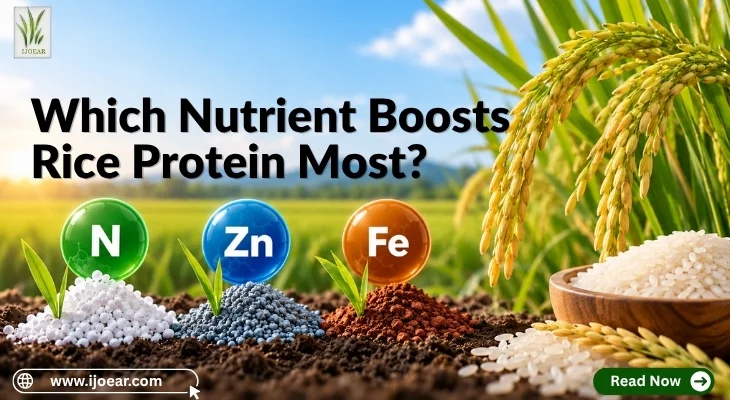
Which Nutrient Boosts Rice Protein Most?
Among the three nutrients, nitrogen has the strongest and most direct effect on rice protein content. It is the primary building block of amino acids, making it essential for protein formation.
However, zinc and iron are equally important in supporting metabolic processes that ensure efficient nitrogen utilization. Without them, nitrogen efficiency decreases, and protein synthesis becomes less effective.
The best results come from balanced nutrient management, not reliance on a single element.
Balanced Fertilization Strategy for Rice Protein Improvement
To maximize rice protein content and grain quality, an integrated approach is recommended:
- Adequate nitrogen application based on soil testing
- Zinc supplementation in deficient soils
- Iron management in alkaline or poorly drained soils
- Use of organic matter to improve nutrient availability
- Split application of nitrogen for better uptake efficiency
This balanced strategy ensures optimal plant nutrition and improved grain composition. For more on integrated nutrient management, see 5 soil fertility strategies for calcareous soils in 2026.
Environmental and Agronomic Considerations
Overuse or imbalance of fertilizers can lead to soil degradation, nutrient leaching, water pollution, and reduced microbial activity. Sustainable nutrient management practices are essential for long-term productivity and environmental protection. For more on sustainable nutrient practices, explore what is sustainable agriculture? principles, practices and importance.
Future Directions in Rice Nutrition Research
Emerging trends in crop nutrition include:
- Nano-fertilizers for controlled nutrient release
- Precision agriculture using soil sensors
- AI-based nutrient recommendation systems
- Biofortification of rice for improved protein quality
- Microbial inoculants to enhance nutrient uptake
These innovations aim to improve both yield and nutritional quality of rice sustainably. For guidance on publishing research in this field, refer to how to publish agriculture research quickly and efficiently.
Nitrogen, zinc, and iron all play important roles in rice cultivation, but nitrogen remains the most powerful nutrient for increasing protein content. Zinc and iron support this process by enhancing enzymatic activity and metabolic efficiency. A balanced fertilization strategy is essential for achieving high-yield, high-quality rice while maintaining soil health and sustainability.
Continue Exploring: Recommended Reads from IJOEAR and AD Publications Blog
You may also find these articles valuable for your research and academic writing journey:
- Rice Nutrition Management 2026: Integrated Nitrogen, Fe & Zn for Higher Protein Yield - Comprehensive guide to nutrient management for rice protein enhancement.
- 5 Soil Fertility Strategies for Calcareous Soils in 2026 - Learn about micronutrient management in challenging soil conditions.
- Biofortified Crops: Fighting Malnutrition with Smart Plant Breeding - Discover breeding approaches for nutrient-enriched rice varieties.
- Precision Agriculture: Maximizing Efficiency and Minimizing Waste - Explore sensor-based nutrient monitoring for optimal fertilizer application.
- Calcareous Soil Farming: Complete Guide to Nutrient Uptake & Crop Quality - Understand nutrient dynamics in high-pH soils affecting rice cultivation.
- How to Write a Research Paper for a Scopus Journal - Get expert guidance on publishing in high-impact journals.
- How to Use Zotero for Citation - Learn to manage references and citations efficiently for your research papers.