
International Journal of Environmental and Agriculture Research - Ethiopia Agricultural Excellence | Sustainable Farming | Food Security in the Horn of Africa
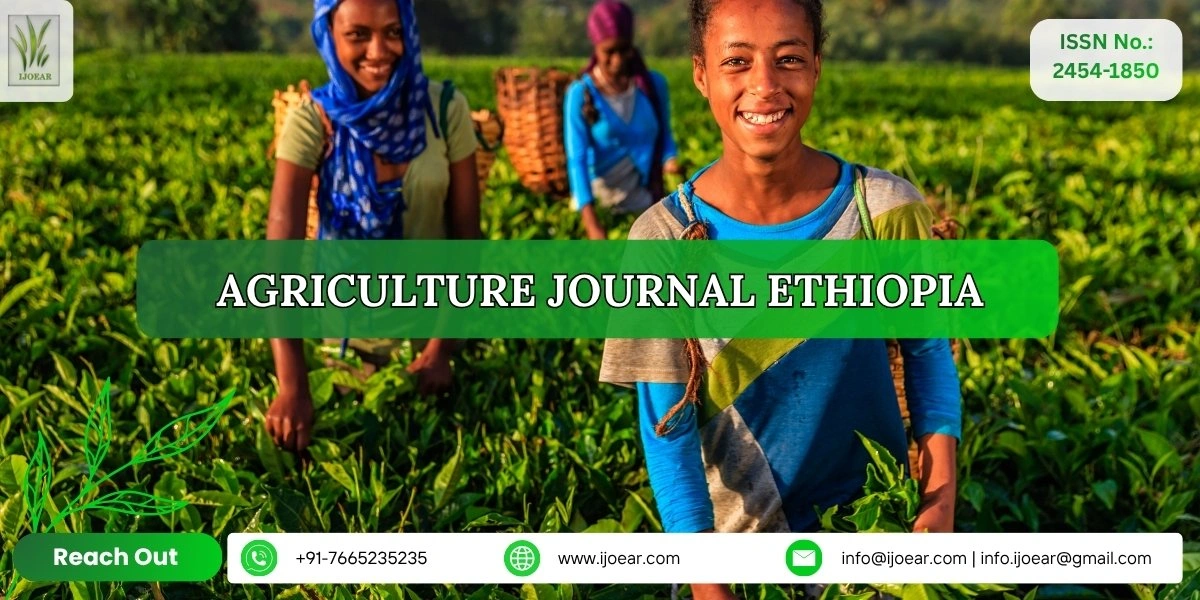
Top Agriculture Journal in Ethiopia
ISSN: 2454-1850 | NAAS Rating: 4.23 | R Impact Factor: 4.38 | DOI: 10.25125/agriculture-journal | Indexed in Google Scholar, WorldCat, Neliti, African Journals Database (in progress)
Agricultural Research Landscape in Ethiopia: Key Statistics
Cultivated Land
(Hectares)
Agricultural Research
Institutes
Agricultural Universities
& Colleges
Annual Agriculture
Research Investment
Source: Ministry of Agriculture (MoA), Ethiopian Institute of Agricultural Research (EIAR), Ethiopian Agricultural Transformation Institute (ATI), 2024 Research Report
Agricultural Research Landscape in Ethiopia
Ethiopia, with approximately 31 million hectares of cultivated land, is a major agricultural producer in the Horn of Africa and one of Africa's largest agricultural economies. The country is world-renowned for its coffee production (Arabica coffee - birthplace of coffee), teff (staple grain used for injera), pulses (chickpeas, lentils, faba beans), oilseeds (sesame, Niger seed, rapeseed), maize, wheat, barley, sorghum, millet, enset (false banana), honey, and livestock (cattle, sheep, goats - Africa's largest livestock population). Ethiopia is also a leading producer of roses and other cut flowers for export. Through the Ministry of Agriculture (MoA), the Ethiopian Institute of Agricultural Research (EIAR), and the Ethiopian Agricultural Transformation Institute (ATI), Ethiopia continues to advance agricultural research and innovation with strong emphasis on food security, crop diversification, and climate-smart agriculture.
Coffee Research (Buna)
Ethiopia is the birthplace of Arabica coffee and a major global producer. Research focuses on variety improvement (Heirloom varieties, Jimma, Yirgacheffe, Sidama, Harar), disease control (coffee berry borer, coffee leaf rust), and quality enhancement.
Teff Research
Teff (Eragrostis tef) is Ethiopia's unique staple grain used for injera. Research focuses on variety improvement (drought-tolerant, high-yield), lodging resistance, and nutritional enhancement.
About IJOEAR: Your Partner in Agricultural Research
The International Journal of Environmental and Agriculture Research (IJOEAR) is a prestigious, peer-reviewed, open-access journal dedicated to advancing agricultural and environmental sciences globally. We provide Ethiopian researchers, agricultural scientists, and environmental professionals with a respected platform to publish their groundbreaking findings and contribute to the global agricultural community.
With our commitment to quality, speed, and visibility, IJOEAR ensures that research from Ethiopia reaches a worldwide audience, fostering collaboration and knowledge exchange that addresses both local and global agricultural challenges. Our journal aims to be accessible through the African Journals Database and other major databases.
Open Access
ክፍት መዳረሻRapid Review
4-6 weeksGlobal Indexing
African Journals Database (in progress)Top Ethiopian Institutions Publishing in IJOEAR
Researchers from these leading Ethiopian institutions have published their work in IJOEAR:
- Haramaya University - College of Agriculture
- Jimma University - College of Agriculture and Veterinary Medicine
- Bahir Dar University - College of Agriculture
- Mekelle University - College of Agriculture
- Addis Ababa University - College of Agriculture
- Hawassa University - College of Agriculture
- Ethiopian Institute of Agricultural Research (EIAR)
- Jimma Agricultural Research Center (JARC)
- Ethiopian Biodiversity Institute (EBI)
Ethiopia's Agricultural Research Priorities
The Ministry of Agriculture (MoA) and the Ethiopian Institute of Agricultural Research (EIAR) have identified key priority areas under the Agricultural Transformation Agenda:
Coffee Research (Buna)
- Arabica coffee variety improvement (Heirloom, Jimma, Sidama, Yirgacheffe)
- Coffee berry borer (Hypothenemus hampei) management
- Coffee leaf rust (Hemileia vastatrix) and CBD control
- Quality enhancement for specialty coffee markets
- Coffee forest conservation and shade management
Teff Research
- Teff variety improvement (drought-tolerant, lodging-resistant)
- Teff grain yield enhancement (injera quality)
- Striga weed control (Striga hermonthica)
- Mechanical and manual harvesting techniques
- Nutritional enhancement (gluten-free grain)
Pulses & Oilseeds Research
- Chickpea (shiro), lentil, faba bean variety improvement
- Sesame export quality enhancement (white sesame)
- Niger seed (noug) improvement for oil production
- Pest management (pod borer, aphids)
- Value-added pulse and oilseed products
Cereal Research | Maize, Wheat, Barley, Sorghum
- Maize variety improvement (drought-tolerant, pest-resistant)
- Wheat rust disease (stem rust, yellow rust, leaf rust) control
- Barley improvement for malt production
- Sorghum and millet improvement for lowland areas
- Fall armyworm (Spodoptera frugiperda) control
Enset (False Banana) Research
- Enset variety improvement (drought-tolerant, disease-resistant)
- Enset bacterial wilt (Xanthomonas) control
- Food security research in southern Ethiopia
- Processing and value addition (kocho, bulla)
- Multistrata agroforestry systems
Livestock Research
- Cattle breeding (Zebu, Boran, Fogera breeds)
- Sheep and goat improvement (fat-tailed sheep, Adal goat)
- Dairy production and pasteurization research
- Animal disease control (trypanosomiasis, pasteurellosis)
- Pasture and rangeland management
Horticulture & Floriculture
- Rose variety improvement (leading flower exporter)
- Vegetable production (onions, tomatoes, potatoes)
- Fruit improvement (mangoes, bananas, citrus, avocados)
- Pest management (thrips, aphids, mites)
- Post-harvest handling and cold chain management
Water Management & Soil Conservation
- Rainwater harvesting and small-scale irrigation
- Soil erosion control (Ethiopian highlands)
- Soil fertility restoration and nutrient management
- Drip irrigation for horticultural crops
- Climate-smart agricultural technologies
Traditional Ethiopian Agriculture & Indigenous Products
Ethiopia has one of the world's oldest agricultural traditions, dating back over 10,000 years with the domestication of enset (false banana) and coffee. The country's unique products are celebrated worldwide, including Ethiopian coffee (Yirgacheffe, Sidama, Harar - birthplace of coffee), teff (injera), Ethiopian honey (white honey from Tigray), Ethiopian butter, traditional tej (honey wine), and khat. The Ethiopian Institute of Agricultural Research (EIAR), Jimma Agricultural Research Center (JARC), and Ethiopian Biodiversity Institute (EBI) maintain extensive collections preserving Ethiopian landraces and heritage varieties.
Traditional Products
Ethiopian Coffee (Buna)
Birthplace of coffee, Yirgacheffe, Sidama, Harar varieties
Teff (Injera)
Ethiopia's unique staple grain, gluten-free superfood
Enset (False Banana)
Unique food security crop of southern Ethiopia
Berbere Spice
Traditional Ethiopian spice blend (chili, garlic, ginger, fenugreek)
Ethiopian Honey (Mar)
White honey from Tigray, for tej (honey wine)
Ethiopian Sesame (Selit)
High-quality white sesame for export
Leading Agricultural Research Institutions in Ethiopia
- Ethiopian Institute of Agricultural Research (EIAR)
- Jimma Agricultural Research Center (JARC)
- Holetta Agricultural Research Center
- Melkassa Agricultural Research Center
- Wondogenet Agricultural Research Center
- Ethiopian Biodiversity Institute (EBI)
- Ethiopian Agricultural Transformation Institute (ATI)
- Ethiopian Veterinary Institute (EVI)
- Ethiopian Forestry Development (EFD)
- Regional Research Centers (Ambo, Assosa, Adet)
Why Ethiopian Researchers Choose IJOEAR
Rigorous Peer Review
Double-blind peer review ensures quality, reliability, and credibility of published research, enhancing your academic reputation.
High Visibility & Impact
Indexed in Google Scholar, CrossRef, WorldCat, Neliti, and Qualis, with African Journals Database indexing in progress.
Rapid Publication
Efficient editorial workflow with average publication time of 4-6 weeks from submission to online publication.
CrossRef DOI Registration
Every published article receives a unique DOI, ensuring permanent accessibility and citation tracking.
Frequently Asked Questions
Comprehensive FAQ for Ethiopian Authors
Find answers about submission process, peer review, publication fees, African Journals Database indexing status, and more for Ethiopian agricultural researchers.
The average time from submission to publication is 4-6 weeks for articles from Ethiopian researchers. Our streamlined peer review process ensures rapid publication without compromising quality.
Yes, IJOEAR is indexed in Google Scholar, CrossRef, WorldCat, Neliti, and Qualis (Brazil). We are actively pursuing indexing in the African Journals Database (AJOL) to increase visibility for Ethiopian researchers.
Current Indexing Status:
- Google Scholar
- CrossRef (DOI Member)
- WorldCat
- Neliti
- Qualis (Brazilian Evaluation System)
- NAAS Rating: 4.23
Absolutely! IJOEAR actively welcomes research on Ethiopian agriculture, coffee production, teff improvement, enset research, pulse and oilseed development, and all areas of Ethiopian agricultural excellence. Research on crop improvement, sustainable farming, climate adaptation, and food security is particularly encouraged.
- Coffee research (Arabica varieties, disease control, quality enhancement)
- Teff research (lodging resistance, yield improvement, weed control)
- Enset research (bacterial wilt control, processing, food security)
- Pulses and oilseeds (chickpea, lentil, faba bean, sesame)
- Cereal research (maize, wheat, barley, sorghum - rust control)
- Livestock research (cattle, sheep, goat breeding, dairy)
- Horticulture and floriculture (roses, vegetables, fruits)
- Soil and water management (Ethiopian highlands conservation)
Publication fees vary based on article type and length. We offer special discounted rates for researchers from Ethiopian institutions, particularly early-career researchers and those from public universities.
Academic Faculty
$100 (USD)
Approx. 5,800 ETB
Students/Scholars
$80 (USD)
Approx. 4,600 ETB
You can submit your article online via the Submit Article Link on the journal's homepage. You can also email your submission to info@ijoear.com or info.ijoear@gmail.com. Electronic submission helps reduce processing time and speeds up publication.
The official language of publication is English to ensure global accessibility. We offer assistance with English language editing and can help polish manuscripts before publication to ensure they meet international standards.
You can contact our editorial office through multiple channels:
WhatsApp:
+91-7665235235
Response within 24 hours on business days
Join Ethiopia's Leading Agricultural Researchers
Share your research with the global agricultural community. IJOEAR is your trusted partner in advancing agricultural science from Ethiopia to the world.
Submit Your Research
Online Submission
https://ijoear.com/submit-article
Fast, secure, and user-friendly submission portal