
International Journal of Environmental & Agriculture Research - Japan 国際環境農業研究ジャーナル - 日本
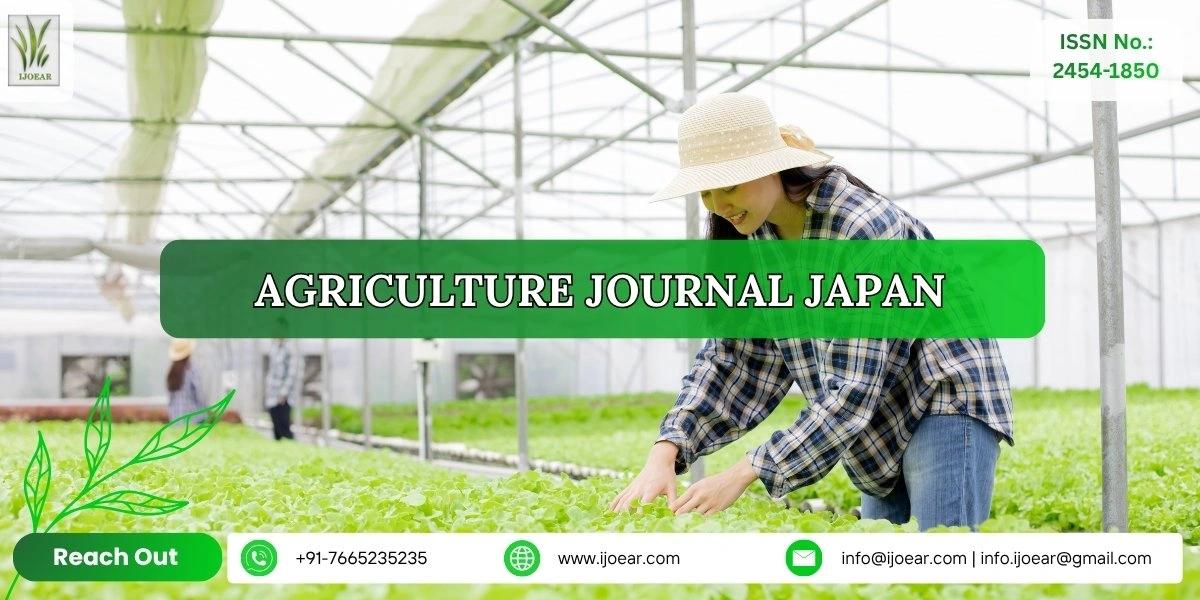
Top Agriculture Journal in Japan | 日本のトップ農業ジャーナル
ISSN: 2454-1850 | NAAS Rating: 4.23 | R Impact Factor: 4.38 | DOI: 10.25125/agriculture-journal | Indexed in CrossRef, Google Scholar, WorldCat
Japan's Agriculture Sector at a Glance | 日本の農業部門概要
World's Largest
Wagyu Beef Producer
World's Largest
Green Tea Exporter
World's Largest
Aquaculture Producer
Rice Self-Sufficiency
(Koshihikari Rice)
Source: Ministry of Agriculture, Forestry and Fisheries (MAFF) Japan, 2024 Report
Japan's Agricultural Landscape | 日本の農業風景
Japan, with a population of over 125 million, has a unique agricultural system that combines traditional practices with cutting-edge technology. The country is famous for its Koshihikari rice, Wagyu beef, Matcha green tea, high-quality fruits ( strawberries, grapes, peaches, apples, mandarins ), and premium seafood. Japanese agriculture is characterized by high productivity, precision farming, and exceptional quality standards.
The agricultural sector, while small in workforce percentage, produces high-value products that are exported worldwide. The government's MAFF policies and Strategic Innovation Promotion Program focus on smart agriculture, robotics, AI, and sustainable farming. IJOEAR provides Japanese agricultural researchers with a prestigious international platform to publish their findings.
Rice & Grain Production | 米と穀物生産
Japan produces over 7.5 million tons of rice annually, with Koshihikari being the most prized variety. The country achieves over 95% self-sufficiency in rice through efficient farming systems.
Horticulture & Fruits | 園芸と果物
Japan is famous for premium fruits including Aomori apples, Shine Muscat grapes, Tochiotome strawberries, Yubari melons, and Satsuma mandarins, often sold at luxury prices.
About IJOEAR: Your Partner in Agricultural Research | 農業研究のパートナー
The International Journal of Environmental & Agriculture Research (IJOEAR) is a prestigious, peer-reviewed, open-access journal dedicated to advancing agricultural and environmental sciences globally. We provide Japanese researchers, agricultural scientists, and environmental professionals with a respected platform to publish their groundbreaking findings and contribute to the global agricultural community.
With our commitment to quality, speed, and visibility, IJOEAR ensures that agricultural research from Japan reaches a worldwide audience, fostering collaboration and knowledge exchange that addresses both local and global food security challenges.
Open Access
オープンアクセスRapid Review
4-6 weeks | 4-6週間Global Indexing
WorldCat, Google ScholarTop Japanese Universities & Research Institutions Publishing in IJOEAR | 主要な日本の大学と研究機関
Researchers from these leading Japanese institutions have published their work in IJOEAR, contributing to the advancement of agricultural science in Japan:
- University of Tokyo
- Kyoto University
- Tohoku University
- Hokkaido University
- Nagoya University
- Okayama University
- National Agriculture and Food Research Organization (NARO)
- RIKEN Center for Sustainable Resource Science
- Japan International Research Center for Agricultural Sciences (JIRCAS)
These institutions represent Japan's commitment to excellence in agricultural and environmental research.
Japan's Agricultural Research Priorities | 日本の農業研究優先事項
Japan's Ministry of Agriculture, Forestry and Fisheries (MAFF) and research institutions have identified key priority areas that align perfectly with IJOEAR's scope:
Rice & Crop Research | 米と作物研究
- Koshihikari rice quality improvement and breeding
- High-yielding and stress-resistant varieties
- Precision rice farming and yield prediction
- Wheat and soybean production research
- Integrated pest management in rice paddies
Horticulture & Fruit Research | 園芸と果物研究
- Premium fruit breeding (strawberries, grapes, apples)
- Protected horticulture and greenhouse technology
- Post-harvest quality preservation
- Vertical farming and plant factories
- Hydroponic and soilless cultivation
Smart Agriculture & Robotics | スマート農業とロボティクス
- Agricultural robotics and automation
- AI-based crop monitoring and management
- Drone technology for spraying and surveying
- IoT sensors and precision farming
- Autonomous tractors and harvesters
Fisheries & Aquaculture Research | 水産と養殖研究
- Bluefin tuna aquaculture and breeding
- Sustainable fisheries management
- Kelp and seaweed cultivation
- Aquaculture technology and feed development
- Marine resource conservation
Japanese Tea Science Research | 日本茶科学研究
Japan is world-famous for its green tea, including Matcha, Sencha, Gyokuro, and Hojicha. Research areas include tea cultivation, processing technology, umami components (theanine), health benefits, and export quality improvement. IJOEAR welcomes research from Japan's leading tea research institutes in Shizuoka and Kagoshima.
World's #1 Green Tea Exporter
Wagyu Beef & Livestock Research | 和牛と畜産研究
Japan is the world leader in Wagyu beef production, with famous breeds including Kobe, Matsusaka, Omi, and Sendai. Research areas include animal breeding, marbling genetics, feeding systems, meat quality, and precision livestock farming. IJOEAR welcomes research on all aspects of Japanese livestock production.
World's Finest Wagyu
Environmental Research in Japan | 日本の環境研究
Japan's diverse environment includes mountains, forests, coastlines, and agricultural landscapes. Environmental research is critical for sustainable development. IJOEAR welcomes research on climate change adaptation, disaster risk reduction, biodiversity conservation, water management, renewable energy, and circular economy specific to Japan's unique ecosystems.
環境研究
Disaster Resilience
Earthquake and tsunami preparedness for agriculture
Satoyama Conservation
Traditional rural landscape preservation
Circular Economy
Food waste reduction and biomass utilization
Scope of Agricultural Research in Japan | 日本の農業研究範囲
IJOEAR publishes high-quality research across all agricultural and environmental disciplines. We welcome submissions from Japanese researchers working in:
Crop Science | 作物科学
- Rice breeding and quality improvement
- Fruit and vegetable science
- Tea science and processing
- Floriculture and ornamental plants
- Wheat and soybean research
- Plant protection and pest management
- Biotechnology and genetic engineering
Soil & Water Science | 土壌水科学
- Soil fertility and nutrient management
- Water-saving irrigation technology
- Soil conservation in mountainous areas
- Watershed and river basin management
Animal Science | 動物科学
- Wagyu beef breeding and genetics
- Dairy and poultry science
- Precision livestock farming
- Veterinary medicine and animal health
Fisheries & Aquaculture | 水産と養殖
- Bluefin tuna and marine aquaculture
- Freshwater aquaculture
- Seaweed and nori cultivation
- Sustainable fisheries management
Smart Agriculture | スマート農業
- Agricultural robotics and automation
- AI and IoT in farming
- Drone and satellite monitoring
- Plant factories and vertical farming
Why Japanese Researchers Choose IJOEAR | 日本の研究者がIJOEARを選ぶ理由
Rigorous Peer Review
Double-blind peer review ensures quality, reliability, and credibility of published research.
High Visibility & Impact
Indexed in Google Scholar, WorldCat, and Index Copernicus, ensuring global visibility.
Rapid Publication
Average publication time of 4-6 weeks from submission to online publication.
CrossRef DOI Registration
Every article receives a unique DOI for permanent accessibility and citation tracking.
Frequently Asked Questions | よくある質問
Comprehensive FAQ for Japanese Agricultural Researchers
Find answers about submission process, peer review, publication fees, and indexing status.
The average time from submission to publication is 4-6 weeks. Our streamlined peer review ensures rapid publication.
Yes, absolutely! IJOEAR actively welcomes research on Wagyu beef, Japanese green tea (Matcha, Sencha), premium fruits, aquaculture, and all aspects of Japanese agricultural innovation.
- Koshihikari rice and premium grain research
- Wagyu beef breeding and marbling genetics
- Japanese green tea (Matcha, Sencha) science
- Smart agriculture and agricultural robotics
- Bluefin tuna aquaculture and marine research
- Koshihikari rice and premium grain research
- Wagyu beef and livestock science
- Japanese green tea (Matcha, Sencha)
- Premium fruit breeding (strawberry, grape, apple)
- Smart agriculture and robotics
- Bluefin tuna and aquaculture
- Plant factories and vertical farming
We offer competitive publication fees for researchers from Japanese institutions, with discounts for early-career researchers and students.
Submit online via Submit Article Link or email to info@ijoear.com or info.ijoear@gmail.com.
Email: info@ijoear.com | info.ijoear@gmail.com
WhatsApp: +91-7665235235
Response within 24 hours | 24時間以内に返信
Join Japan's Leading Agricultural Researchers | 日本の主要農業研究者に参加する
Share your research with the global agricultural community. IJOEAR is your trusted partner.