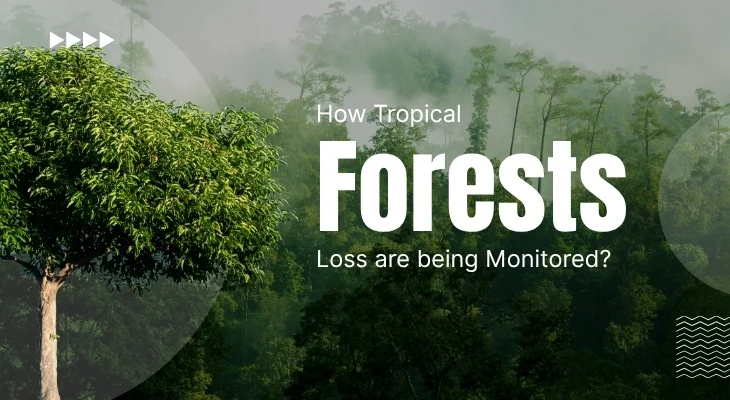
Tropical forests are among the most biologically diverse and ecologically important ecosystems on Earth. They regulate climate, store large amounts of carbon, support millions of species, and provide livelihoods for indigenous and rural communities. However, these forests are experiencing rapid degradation and loss due to human activities and environmental pressures. Tropical forest loss has become a major global concern in the context of climate change, biodiversity decline, and sustainable development.
Understanding the drivers of forest loss and the methods used to assess it is essential for designing effective conservation strategies and restoring degraded landscapes. For a broader perspective on biodiversity conservation, explore our guide on biodiversity conservation research: latest innovations shaping the future.
Understanding Tropical Forest Loss
Tropical forest loss refers to the reduction in forest cover in tropical regions due to deforestation, degradation, or conversion of forest land to other land uses. It includes both complete removal of forest cover and gradual degradation of forest quality.
This loss affects:
- Biodiversity richness
- Carbon storage capacity
- Hydrological cycles
- Soil fertility
- Indigenous livelihoods
Tropical forests in regions such as the Amazon, Central Africa, and Southeast Asia are particularly vulnerable.
Major Factors Responsible for Tropical Forest Loss
Tropical forest loss is driven by a complex mix of agricultural, industrial, demographic, and environmental factors.
1. Agricultural Expansion
Agricultural expansion is the leading cause of tropical deforestation. Large areas of forest are cleared for commercial farming, smallholder agriculture, plantation crops such as palm oil, rubber, and cocoa, and livestock grazing. As global food demand increases, pressure on forest land continues to rise.
2. Logging Activities
Logging, both legal and illegal, contributes significantly to forest degradation. It involves selective timber extraction, clear-cutting practices, and road construction into forest interiors. Even selective logging can damage surrounding vegetation and open forests to further degradation.
3. Infrastructure Development
Infrastructure projects often lead to large-scale forest loss. Common developments include road construction, hydropower dams, urban expansion, and mining infrastructure. These projects fragment forests and increase human access to previously undisturbed areas.
4. Mining and Resource Extraction
Mining activities result in direct forest clearing and environmental pollution. Impacts include removal of vegetation, soil degradation, water contamination, and habitat destruction. Mineral extraction in tropical regions is a growing driver of deforestation.
5. Fuelwood and Charcoal Production
In many developing regions, forests are heavily used for energy needs. Unsustainable harvesting of firewood and charcoal leads to gradual forest degradation, especially near rural settlements and urban centers.
6. Climate Change and Natural Disturbances
Climate change intensifies forest vulnerability through increased temperature stress, drought conditions, forest fires, and pest and disease outbreaks. These factors weaken forest ecosystems and accelerate degradation. For more on climate impacts, read climate change and its impact.
7. Population Growth and Urbanization
Rising population increases demand for land, housing, and resources. Consequences include expansion of settlements into forest areas, increased demand for agricultural land, and higher consumption of forest products. Urban expansion often leads to permanent forest conversion. For related insights, read latest research on urbanization and green infrastructure.

Environmental Impacts of Tropical Forest Loss
Biodiversity Decline: Tropical forests host more than half of the world's terrestrial species. Forest loss leads to habitat destruction and species extinction.
Carbon Emissions: Deforestation releases large amounts of stored carbon dioxide, contributing significantly to global warming. For related data on agricultural emissions, read greenhouse gas emissions in farming: sources, measurement and mitigation.
Disruption of Water Cycles: Forests regulate rainfall patterns and maintain watershed stability. Loss of forest cover leads to irregular rainfall and increased flooding.
Soil Degradation: Without tree cover, soil becomes exposed to erosion, nutrient loss, and reduced fertility. For more on soil health, see carbon sequestration in soils: scope in Ph.D. research.
Livelihood Loss: Indigenous and rural communities that depend on forests for food, medicine, and income are severely affected.
Methods for Assessing Tropical Forest Loss
1. Remote Sensing Technology
Satellite imagery is one of the most widely used tools for monitoring forest change. It allows researchers to detect deforestation patterns, monitor forest degradation, and track land-use changes over time. Common satellite systems include Landsat and Sentinel missions.
2. Geographic Information Systems (GIS)
GIS tools help analyze spatial patterns of forest loss. They are used for mapping deforestation hotspots, overlaying land-use data, and analyzing forest fragmentation. GIS enables integration of multiple datasets for better decision-making. For related spatial analysis methods, read geospatial analytics for climate risk assessment in agriculture.
3. Field Surveys
Ground-based forest inventory provides detailed ecological data. Measurements include tree density, species composition, diameter at breast height (DBH), and canopy cover. Field surveys validate satellite data and improve accuracy.
4. Aerial and Drone Monitoring
Drones and aircraft provide high-resolution imagery for small-scale forest monitoring. They are useful for detecting illegal logging, assessing forest health, and monitoring remote or inaccessible areas.
5. Carbon Stock Estimation
Forest loss is also assessed through carbon accounting methods. These include biomass measurement, carbon sequestration models, and IPCC-based estimation frameworks. This approach links deforestation with climate change impacts.
6. Machine Learning and AI Models
Advanced AI systems are increasingly used to predict and analyze forest loss. They can identify deforestation trends, predict high-risk areas, process large satellite datasets, and improve monitoring accuracy. For more on AI applications, explore AI-powered phenotyping and genomics integration.
Regional Hotspots of Tropical Forest Loss
Amazon Basin: Experiences large-scale deforestation due to agriculture, cattle ranching, and infrastructure development.
Central Africa: Faces forest degradation from logging, fuelwood harvesting, and shifting cultivation.
Southeast Asia: Significant forest loss driven by palm oil plantations, logging, and urban expansion.
Strategies for Reducing Tropical Forest Loss
- Sustainable Agriculture: Promoting agroforestry and sustainable farming reduces pressure on natural forests. For related insights, read agroforestry and intercropping systems.
- Reforestation and Afforestation: Planting trees helps restore degraded ecosystems and improve carbon storage.
- Strong Policy Enforcement: Effective forest laws and monitoring systems are essential to control illegal activities.
- Community-Based Forest Management: Involving local communities ensures better protection and sustainable use of forest resources.
- Use of Technology: Satellite monitoring, drones, and AI-based systems improve forest surveillance and enforcement.
Importance of Forest Conservation
Protecting tropical forests is critical for climate change mitigation, biodiversity conservation, water resource stability, sustainable livelihoods, and global ecological balance. Forests are not only environmental assets but also economic and cultural resources that must be preserved for future generations. For guidance on publishing research in this field, refer to how to publish agriculture research quickly and efficiently.
Tropical forest loss is driven by a complex mix of agricultural, industrial, demographic, and environmental factors. While the pressures on forests continue to grow, modern assessment methods such as remote sensing, GIS, and AI provide powerful tools for monitoring and managing forest change. Strengthening conservation strategies and promoting sustainable land use are essential steps toward protecting the world's tropical forests and ensuring long-term ecological stability.
Continue Exploring: Recommended Reads from IJOEAR and AD Publications Blog
You may also find these articles valuable for your research and academic writing journey:
- Biodiversity Conservation Research: Latest Innovations Shaping the Future - Explore cutting-edge approaches to preserving genetic and ecosystem diversity.
- Climate Change and Its Impact - Understand climate variability effects on forest ecosystems and agriculture.
- Carbon Sequestration in Soils: Scope in Ph.D. Research - Understand soil carbon dynamics in forest and agroforestry systems.
- Agroforestry and Intercropping Systems: A Practical and Research-Oriented Guide - Explore design principles for integrating trees and crops in sustainable farming systems.
- Regenerative Agriculture: Increasing Farm Resilience and Profitability - Discover soil health and agroecological practices for sustainable land management.
- How to Write a Research Paper for a Scopus Journal - Get expert guidance on publishing in high-impact journals.
- How to Use Zotero for Citation - Learn to manage references and citations efficiently for your research papers.