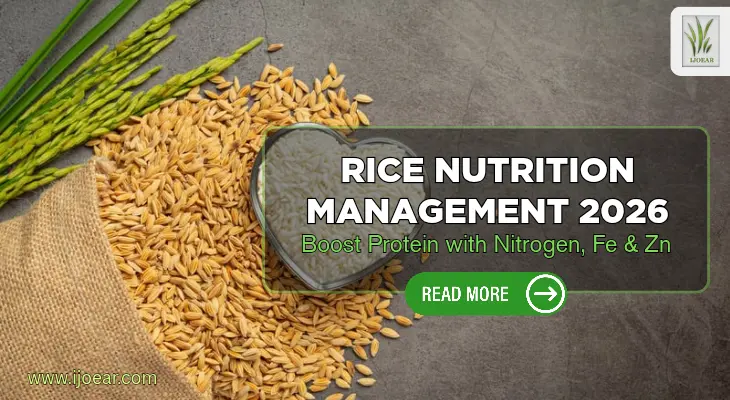
Rice is one of the most important staple food crops in the world, feeding more than half of the global population. In countries like India, China, Bangladesh, Indonesia, Vietnam, and several African nations, rice serves as the primary source of daily calories. However, while rice provides energy through carbohydrates, it is often low in essential nutrients such as protein, iron (Fe), and zinc (Zn). Nutritional deficiencies associated with rice-based diets continue to affect millions of people worldwide.
In 2026, agricultural researchers and nutrition scientists are focusing on advanced rice nutrition management strategies to improve grain quality, protein concentration, and micronutrient enrichment. Modern rice production is no longer only about achieving higher yields. Farmers and researchers are now emphasizing "nutritional productivity," which means producing rice with better protein content and improved mineral composition while maintaining sustainability and profitability. For insights into related soil health research, explore our article on carbon sequestration in soils: scope in Ph.D. research.
Nitrogen (N), iron (Fe), and zinc (Zn) are among the most critical nutrients influencing rice growth, grain development, and nutritional quality. Proper management of these nutrients can significantly improve rice protein levels, grain quality, plant health, and human nutrition.
This blog explores the latest trends, research developments, nutrient management strategies, and future technologies associated with rice nutrition management in 2026.
Importance of Nutritional Quality in Rice
Rice is consumed daily by billions of people, but polished rice grains often contain lower levels of essential proteins and micronutrients. This creates major nutritional challenges, especially in developing countries where rice dominates the diet.
Some major nutritional concerns related to rice consumption include:
- Protein deficiency
- Iron deficiency anemia
- Zinc deficiency
- Hidden hunger and malnutrition
- Poor dietary diversity
Improving rice nutritional quality through better nutrient management can help address these global health concerns. Scientists are increasingly working on integrated nutrient management systems that improve both crop productivity and nutritional value. For a deeper understanding of global indexing that supports such research, see Top AGRICOLA indexed journals in agriculture, environment, and food science.
Understanding Rice Nutrition Management
Rice nutrition management refers to the scientific application of essential nutrients to optimize plant growth, grain yield, nutrient uptake, and grain quality. Modern nutrient management integrates soil fertility management, balanced fertilizer application, precision nutrient delivery, foliar nutrition, biofertilizers, smart agriculture technologies, and site-specific nutrient management. The goal is to ensure that rice plants receive adequate nutrients at the right growth stages for maximum efficiency and improved grain nutrition.
Role of Nitrogen in Rice Protein Enhancement
Nitrogen is the most important nutrient influencing rice growth and grain protein content. Protein molecules are made from amino acids, which require nitrogen for synthesis. Therefore, proper nitrogen management directly affects rice protein accumulation.
Why Nitrogen is Important: Nitrogen supports leaf development, chlorophyll formation, photosynthesis, tillering, grain filling, and protein synthesis. Nitrogen deficiency leads to pale leaves, poor plant growth, low biomass, and reduced grain protein concentration.
Nitrogen and Rice Protein Relationship: Research in 2026 continues to confirm that increased nitrogen availability can improve rice grain protein content significantly. However, excessive nitrogen application may create environmental problems such as nitrogen leaching, water pollution, greenhouse gas emissions, lodging problems, and reduced nutrient use efficiency. Therefore, modern rice nutrition management focuses on "efficient nitrogen use" instead of simply applying large fertilizer quantities. Learn about precision agriculture: maximizing efficiency and minimizing waste for related approaches.
Advanced Nitrogen Management Strategies in 2026
- Split Nitrogen Application: Instead of applying all nitrogen at once, farmers now use split application techniques at basal, tillering, panicle initiation, and grain filling stages to improve uptake efficiency and enhance grain protein accumulation.
- Precision Nitrogen Management: Drone monitoring, AI-based nutrient analysis, remote sensing, soil nutrient mapping, chlorophyll meters, and smartphone advisory systems reduce nitrogen wastage and improve sustainability.
- Controlled-Release Fertilizers: These release nutrients gradually according to crop demand, minimizing losses and improving nutrient use efficiency.
- Nano Nitrogen Fertilizers: Nano-fertilizer technology is emerging as a major innovation in rice nutrition management, improving nutrient absorption and reducing fertilizer requirements.
- Biofertilizers and Microbial Nitrogen Fixation: Beneficial microbes naturally enhance nitrogen availability in rice soils.
Role of Iron (Fe) in Rice Nutrition
Iron is an essential micronutrient for both plant growth and human health. Iron deficiency affects millions of people worldwide, especially women and children. Rice plants require iron for chlorophyll synthesis, energy transfer, respiration, enzyme activation, and photosynthesis. Iron deficiency in rice fields often causes chlorosis, stunted growth, and poor productivity.
Iron Deficiency in Rice-Based Diets: Polished rice grains generally contain low iron concentrations because much of the iron is lost during milling and polishing. This contributes to iron deficiency anemia, weak immunity, fatigue, and poor cognitive development. Researchers in 2026 are focusing on iron biofortification strategies to improve rice grain iron content. For broader applications of biotechnology, see CRISPR and gene editing applications in crops.
Modern Iron Management Techniques: Soil iron application (e.g., ferrous sulfate), foliar iron sprays, iron biofortification (developing varieties with higher grain iron), integrated nutrient management combining organic matter with iron fertilizers, and AI-powered smart soil sensors for early deficiency detection.
Role of Zinc (Zn) in Rice Production and Human Health
Zinc is another essential micronutrient required for plant metabolism and human nutrition. In rice plants, zinc supports enzyme activation, root development, hormone regulation, grain formation, and stress tolerance. Zinc deficiency is widespread in rice-growing soils, especially in Asia.
Zinc Deficiency and Human Nutrition: Zinc deficiency in humans can lead to poor immunity, growth retardation, increased disease susceptibility, and reduced cognitive development. Since rice is a staple food for billions, zinc-enriched rice can help improve global nutrition.
Zinc Management Strategies in 2026: Zinc-enriched fertilizers (zinc sulfate and zinc-coated fertilizers), foliar zinc nutrition during reproductive stages, zinc biofortification (varieties with higher zinc content), nano zinc fertilizers, and soil organic matter improvement to enhance zinc availability. Discover more about biofortified crops: fighting malnutrition with smart plant breeding.

Integrated Nitrogen, Iron, and Zinc Management
Modern research emphasizes balanced nutrient management rather than focusing on single nutrients. Integrated management of nitrogen, iron, and zinc offers several benefits: improved grain protein, better nutrient density, higher yields, improved plant health, enhanced stress tolerance, better nutrient use efficiency, and reduced environmental impact. Balanced fertilization helps optimize nutrient interactions within the plant system. For a foundational understanding of sustainable systems, read regenerative agriculture: a conceptual foundation.
Precision Agriculture in Rice Nutrition Management
Precision agriculture is transforming nutrient management in rice cultivation. Technologies used in 2026 include drone-based nutrient monitoring, AI-based advisory systems providing customized fertilizer recommendations, satellite imaging to monitor crop nutrient status over large areas, IoT soil sensors continuously monitoring nutrient levels and moisture conditions, and mobile apps providing real-time nutrient management guidance. These technologies improve nutrient efficiency while reducing production costs. Explore AI-powered phenotyping and genomics integration for more on smart farming.
Climate Change and Rice Nutrient Management
Climate change affects nutrient availability, plant uptake, and soil fertility. Major challenges include flood stress, drought conditions, heat stress, soil degradation, and nutrient losses. Researchers are developing climate-resilient nutrient management strategies that maintain rice nutritional quality under changing environmental conditions. For related insights, see climate resilient crops: ensuring food security in a changing climate.
Sustainable Approaches in Rice Nutrition Management
Sustainability is becoming a major priority in rice research. Sustainable strategies include integrated nutrient management, organic farming, biofertilizers, green manuring, crop residue recycling, reduced chemical dependency, and precision nutrient application. These practices help maintain long-term soil fertility and environmental health.
Future Research Trends in Rice Nutrition 2026
- Biofortified Rice Varieties: Scientists are developing rice with naturally higher protein, iron, and zinc concentrations. Read about top trending research topics in agriculture.
- Gene Editing Technologies: CRISPR-based research is helping improve nutrient accumulation efficiency.
- AI-Driven Nutrient Prediction Models: Machine learning systems predict nutrient deficiencies before symptoms appear.
- Nano Agriculture: Nano fertilizers are expected to revolutionize nutrient delivery systems.
- Smart Fertilizer Systems: Future fertilizers may release nutrients according to plant demand and environmental conditions.
- Soil Microbiome Research: Scientists are exploring beneficial soil microbes that improve nutrient uptake naturally.
For advanced simulation tools supporting such research, see Agricultural Production Systems Simulator (APSIM).
Challenges in Rice Nutrition Management
Despite technological advancements, several challenges remain: high fertilizer costs for small farmers, lack of farmer awareness leading to imbalanced fertilization practices, soil variability requiring site-specific recommendations, environmental concerns from excess fertilizer application, and climate uncertainty affecting nutrient dynamics and crop response.
Importance for Global Food and Nutritional Security
Improving rice nutritional quality is critical for global health and food security. Nutrient-rich rice can help reduce malnutrition, improve public health, support sustainable agriculture, enhance farmer profitability, and improve dietary quality. Rice nutrition management is becoming a major component of sustainable agricultural development strategies worldwide. For guidance on publishing such impactful research, refer to how to publish agriculture research quickly and efficiently.
Rice nutrition management in 2026 is evolving rapidly through scientific innovation, precision agriculture, biofortification, and sustainable farming approaches. Nitrogen, iron, and zinc play essential roles in improving rice protein content, grain quality, crop productivity, and human nutrition. Modern research is focusing on balanced nutrient management systems that optimize nutrient efficiency while protecting environmental sustainability. Precision farming technologies, AI-based advisory systems, nano fertilizers, and climate-smart nutrient strategies are transforming rice cultivation globally.
As the world faces increasing challenges related to food security, climate change, and malnutrition, improving rice nutritional quality through advanced nutrient management will remain a key priority in agricultural research. Sustainable rice nutrition management not only benefits farmers and agricultural productivity but also contributes significantly to global nutritional security and human health. For a broader perspective on sustainable farming, explore regenerative agriculture: increasing farm resilience and profitability.
Recommended Reads
- Biofortified Crops: Fighting Malnutrition with Smart Plant Breeding
- Water Conservation and Smart Irrigation Systems
- Latest Research on Low-Water Precision Irrigation Systems
- CRISPR and Gene Editing Applications in Crops: Transforming Agriculture for the Future
- Top Trending Research Topics in Agriculture