The world is facing a phase of unparalleled agri-climatic uncertainty. Currently (as of the year 2026), because of a combination of an agri-climatically challenged environment and a world population touching close to 8.5 billion, conventional agri-technologies have reached their ultimate limits. The world of academia, research professors, and research students faces a transition from "observation-based" agriculture to "design-based" crop biotechnology.
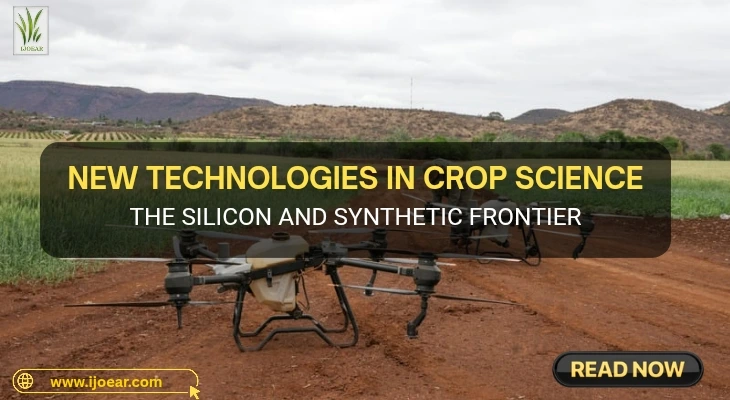
The paradigm shift towards Agriculture 5.0 is marked by the coupling of biological systems with high-order computational intelligence. New technologies in crop science focus on Precision Agriculture, using AI, drones, IoT sensors, and robotics for data-driven management (GPS, analytics) to optimize water and fertilizer use, detect diseases early, and automate tasks like harvesting and weeding. Other key areas include Biotechnology (CRISPR), Controlled Environment Agriculture (CEA, vertical farming), and Big Data/Digital Twins—all driving efficiency, sustainability, and higher yields by minimizing inputs and environmental impact. For a foundational understanding of precision agriculture, explore our guide on precision agriculture: maximizing efficiency and minimizing waste.
1. Advanced Genome Engineering: Beyond Standard CRISPR-Cas9
Although the CRISPR-Cas9 system was a revolutionary tool for functional genomics over the past decade, the years 2025–2026 have introduced sophisticated architectures with greater precision in genome editing. These approaches are no longer focused solely on gene deletion but rather on the reconstruction of metabolic pathways.
Prime Editing and Base Editing
These techniques enable "search-and-replace" functions that allow specific nucleotide changes without creating double-stranded breaks (DSBs). For researchers, this means the capability of fine-tuning protein functions—for example, altering the sensitivity of the ABA receptor to make plants more drought-tolerant without the off-target effects brought about by random insertions. For more on CRISPR applications, read CRISPR and gene editing applications in crops.
Epigenetic Editing
A set of technologies has recently emerged targeting the "epigenome" rather than the DNA sequence. Using catalytically inactive Cas proteins (such as dCas9) fused to methyltransferases, scientists can temporarily silence or activate genes. This provides a pathway for "transient adaptation"—enabling crops to survive one season of extreme heat without permanently altering the lineage.
Multiplex Editing of Polygenic Traits
Most agronomic traits, such as yield and water-use efficiency, are polygenic. New "CRISPR-array" technologies enable editing of up to 50 distinct loci simultaneously. This becomes critical for breeding crops that require holistic structural changes, such as altering root architecture while simultaneously increasing photosynthetic leaf area.
2. Nanoagronomy: Targeted Delivery and Stress Amelioration
Nanotechnology is no longer a peripheral field; it has become the "delivery vehicle" for modern crop science. Since the infancy of agriculture, the sheer inefficiency of chemical applications has always been a major problem: over 70% of fertilizers and pesticides are lost to the environment.
Stimuli-Responsive Nanocarriers
These are "smart" particles designed to release their payload (nitrogen, phosphorus, or RNAi) only under specific physiological triggers. For example, nanocarriers can be engineered to degrade specifically when soil reaches a certain pH or when a plant releases "stress volatiles" signaling a pest attack.
Carbon Quantum Dots for Photosynthesis
Research during 2026 has investigated expanding the light-harvesting spectrum of plants using Carbon Quantum Dots (CQDs). These nanomaterials, by converting UV light into visible blue or red light, effectively increase the light energy available for Rubisco-mediated carbon fixation, pushing the theoretical limits of C3 plant productivity.
Nanosensors for Real-Time Phenotyping
The architecture of bionic plants—achieved by embedding gold and silver nanoparticles into plant tissues—is becoming a reality. These sensors can emit signals about glucose levels or sap flow directly to a researcher's handheld device, providing a "pulse" of the plant's internal state in real-time. For related insights on AI-powered phenotyping, see AI-powered phenotyping and genomics integration.

3. The Silicon Frontier
Silicon (Si) is highly beneficial for crop health and stress resistance, though it is not considered an essential nutrient in plants. The silicon frontier involves the use of silicon nanoparticles (SiNPs) and soluble silicate products in precision farming.
Applications and Benefits
Increased Stress Resistance: SiNPs can increase plant ability to resist abiotic stresses such as drought, salt, and heavy metal stress by improving cell wall strength and plant defense systems.
Enhanced Growth and Productivity: Silicon supplementation has been found to promote growth, elevate photosynthetic efficiency, and increase nutrient utilization efficiency (phosphorus and calcium) for many crops.
Natural Pest and Disease Resistance: Silicon makes plant tissues tougher, providing a protective measure against fungal attacks and pests. This lessens the need for pesticide applications. For more on sustainable pest management, read sustainable pest and disease management.
Precision Delivery Systems: SiNPs are employed as carriers for the controlled release of fertilizers, pesticides, and plant growth regulators, preventing waste and environmental pollution.
4. The AI and Digital Twin Revolution
The "Dry Lab" is as essential as the "Wet Lab." Artificial Intelligence and Machine Learning are responsible for handling the massive data generated by high-throughput phenotyping and multi-omics approaches.
In Silico Breeding and Digital Twins
Researchers are developing "Digital Twins" for specific crop varieties. These advanced computer models can forecast how a specific genotype (G) will interact with a specific range of environment (E) and management (M) conditions. The G × E × M model allows researchers to examine millions of predictions for yield stability without needing to go to the greenhouse.
Computer Vision and Robotic Phenotyping
Automated "phenomobiles" are increasingly used by graduate students. These systems employ LiDAR and hyperspectral imaging technologies to assess 3D architecture, chlorophyll fluorescence, and leaf angles of thousands of plots within a single day. They identify "elite" lines that cannot be detected by the naked eye.
De Novo Protein Design and Generative AI
AI technology now has significance in designing completely novel synthetic proteins or enzymes for the optimization of carbon sequestration or nitrogen fixation functions—moving beyond data analysis toward active biological design. For more on AI in agriculture, explore blockchain and AI in agriculture.
5. Synthetic Biology: Building the Bio-Factory
Synthetic biology is propelling crop research towards "biological manufacturing." Biomass is being viewed as a programmable chassis to install novel biological pathways.
Organosilicon Synthesis
Scientists have engineered bacterial enzymes to form carbon-silicon bonds—considered a major step toward creating hybrid organosilicon compounds within living systems.
Reprogramming Plant Cells
Plant synthetic biology aims to innovate metabolic pathways to produce user-tailored traits, such as increased nutrient efficiency, potentially in contained environments like space habitats.
C4 Rice Initiatives
The aim to develop C4 photosynthesis in C3 crops such as rice has again gained prominence. Using gene circuits, scientists are effectively enclosing enzymes in the mesophyll and bundle sheath cells, promising an enhancement of water-use efficiency by 50%.
Biological Nitrogen Fixation in Non-Legumes
This research aims to reduce dependence on commercial urea. Work in progress involves introducing the nif gene cluster into the mitochondria or plastids of cereal plants, while other researchers aim to reengineer the rhizosphere to increase "endophytic associations" between nitrogen-fixing bacteria and corn or wheat. For related agricultural biotechnology, see agri-biotechnology and genetic engineering.
Phytoremediation and Biofortification
Synthetic biologists are employing hyper-accumulation of micronutrients such as iron and zinc in the edible parts of grains, along with exclusion of heavy metals such as cadmium from root uptake processes.
6. Beyond 2026
Breakthroughs in Space Agriculture
The first "low-gravity-optimized" wheat was successfully harvested on the International Space Station in early 2026 through hydroponic systems affiliated with AI-controlled nutrition delivery.
Changes in Regulations
Some EU countries have recently changed their "New Genomic Techniques" regulatory policies, separating "Category 1" modifications (indistinguishable from spontaneous mutations) from "Category 2" modifications, thus greatly reducing trial requirements for Category 1.
Perennial Grains
Major research centers have achieved breakthroughs in the "de novo domestication" of perennial wild relatives of wheat. By applying CRISPR technologies to edit genes responsible for domestication traits such as seed shattering and kernel size, they have bred varieties that do not need to be replanted annually. As a result, soil erosion has been substantially reduced. For more on climate-resilient crops, read climate-resilient crops ensuring food security.
7. The Future Path for Researchers
Today's graduate students and professors face the challenge of fluency across multiple disciplines. The crop scientist in 2026 needs to be part biologist, part data scientist, and part materials scientist.
The technologies we are advancing have the potential to do more than lift the yield curve—they can show the way to a bio-economy that heals the planet instead of draining its resources. The convergence of computational prediction and precise biological implementation is the only way through which the world's food requirements can be met while satisfying the stringent sustainability demands necessitated by our changing climate. For insights on publishing cutting-edge research, refer to how to publish agriculture research quickly and efficiently.