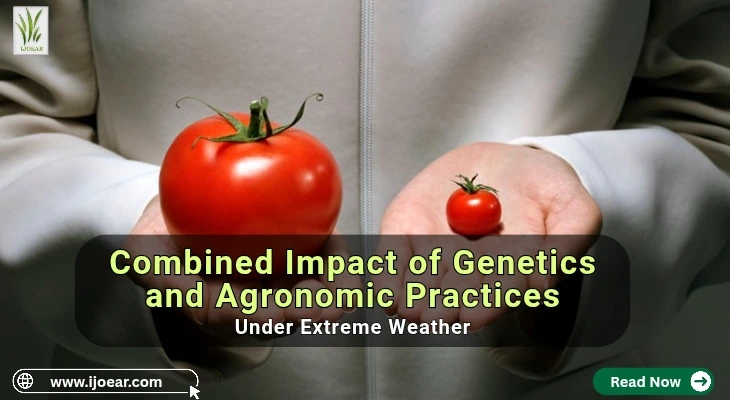
The interaction of agronomic practice and plant genetics conditions the resilience, productivity, and long-term viability of agricultural systems under extreme weather conditions. As climate fluctuations amplify the frequency and severity of heat waves, droughts, cold spells, and salinity, agricultural sciences are increasingly pressured towards integrated solutions that bring together genetic enhancement and field-level management.
Evidence in literature of crop physiology, plant breeding, and agronomy suggests that single-factor interventions are not sufficient. Synergistic strategies are instead required to help stabilize crops. This article synthesizes publications in plant breeding research, crop physiology, agronomic management, and climate science.
The objective is to explain the interaction between genetic potential, planting density, nutrient regimes, irrigation operations, soil management, biotic stress resistance, and contemporary precision agronomy to mediate crop performance during climate extremes. The physiological processes that form the basis of plant responses—such as stomatal behavior, root architecture, reproductive resilience, carbohydrate partitioning, photoprotection, and cellular-level detoxification—are also discussed. This synthesis is meant to help graduate students and researchers design multi-layer adaptation frameworks. For foundational reading, explore our guide on climate change and its impact on agriculture.
Foundations of Genetic and Agronomic Interactions Under Extreme Climate
Genetic Architecture of Stress Responses
The networks of genes, quantitative trait loci, transcription factors, signaling proteins, and metabolic pathways regulate plant responses to extreme weather. Classical breeding books underline that stress resistance is polygenic, with additive and epistatic interactions that regulate traits of osmotic adjustment, membrane stability, heat shock protein production, antioxidant metabolism, and root system development.
Contemporary genomic methods have identified groups of adaptive alleles that lead to multi-stress resilience. As an example, genes that affect responses to drought and heat are regulated by genes that control abscisic acid signaling, and those that affect salinity resistance are regulated by genes that control ion homeostasis.
According to molecular breeding books, high temperature tolerance entails alleles that preserve enzyme stability, pollen fertility, and thylakoid membrane integrity. Drought-associated genes control compatible solutes, dehydrins, and late embryogenesis abundant proteins. Cold tolerance is determined by C-repeat binding factors that control downstream cold-responsive genes. Flooding survival is based on genes for aerenchyma development and ethylene regulation. Genome-wide association mapping and genomic prediction are quantitative genetic approaches that enable breeders to select the best genotypes at a much finer level. Learn more about CRISPR and gene editing applications in crops.
Agronomic Foundations of Climate Adaptation
Genetic potential is manifested through agronomy to provide environmental and management context. The interaction between genotype and environment, as explained in crop physiology literature, states that under favorable agronomic conditions the genetic ceiling of stress tolerance is expressed, while in disadvantageous management situations tolerant genotypes are repressed.
Microclimate, nutrient availability, water balance, soil biota, weed competition, and prevalence of pests and diseases are directly influenced by agronomic practices. All these affect plant hormonal balances and metabolic processes which are already strained under extreme weather.
Climate stress adaptation strategies in agriculture comprise conservation tillage, mulching, optimized sowing windows, irrigation scheduling, balanced fertilization, plant growth regulators, soil amendments, and mixed cropping systems.
The Genotype-Management Interaction Concept
Genotype-environment-management frameworks in agricultural systems science explain the combined effects of genetics and agronomic practices. The interaction between genotype and environment is not directly related to yield but rather through the interaction of environment and genotype via management.
Genotype expression is plastic, occurring where agronomic indices align with physiological requirements. As an illustration, a drought-resistant variety needs soil moisture conservation practices to realize its full potential. Even a heat-tolerant genotype will require canopy cooling through optimized irrigation to prevent reproductive failure. Modern climate-ready agriculture is based on this synergistic perspective.
Extreme Climate Events and Plant Physiological Stress
Drought Stress and Genetic-Physiological Pathways
Drought causes a cascade of physiological disturbances: decreased stomatal conductance, inhibition of photosynthesis due to low leaf water potential, oxidative stress, and cell wall deformity. According to Passioura and Kirkham, drought-tolerant genotypes possess high turgor pressure, efficient osmotic adjustment, deep roots, high hydraulic conductivity, and improved reactive oxygen species detoxification.
Heat shock protein genes prevent denaturation of enzymes and membranes, whereas dehydrins prevent denaturation of proteins and lipids. Genetic variation exists in rooting depth, root angle, lateral root initiation, and xylem structure, which interact to affect drought avoidance. Quantitative trait loci including those controlling aquaporin expression increase water uptake. Tolerant genotypes maintain photochemical efficiency even under water deficiency because of enhanced non-photochemical quenching.
Heat Stress and Reproductive Vulnerability
Heat stress during flowering and grain filling results in poor fertilization due to pollen sterility, early leaf senescence, membrane leakage, and reduced grain filling period. Crop reproduction physiology textbooks highlight pollen development as the most heat-sensitive reproductive stage.
Genetic characteristics that aid heat resistance include stable tapetal development, cool canopy traits, maintenance of photosystem function, and early morning flowering which helps avoid high heat conditions. Heat-tolerant genotypes store heat shock proteins and stabilizing metabolites which protect proteins from oxidative damage. For related insights, read heat and drought tolerant crops: genetic and agronomic interventions.
Flooding Stress and Oxygen Deprivation
Consequences of flooding include hypoxia or anoxia that interferes with aerobic respiration, causes toxic metabolite buildup, limits nutrient uptake, and predisposes lodging. Strongly tolerant genotypes possess genes that enable aerenchyma development for internal oxygen diffusion to roots and remobilization of carbohydrates to roots. Sub1 and Snorkel genes in rice, which result in quiescence and elongation strategies, are expressed in flood-tolerant rice genotypes.
Raised bed planting, drainage lines, and controlled irrigation significantly influence these genetic peculiarities. Flooding tolerance genes cannot fully operate without supportive management.
Cold Stress and Metabolic Disruption
Low temperatures retard enzyme activity, interfere with membrane fluidity, influence phloem loading, and damage reproductive organs. Genetic cold tolerance involves C-repeat binding factors that trigger cold-responsive genes increasing cryoprotection. Membrane lipid composition modulates to maintain fluidity. These genetic traits are supplemented by agronomic activities such as seed priming, anti-frost covers, and delayed sowing.
Salinity and Ion Homeostasis
Salinity causes nutritional imbalance and osmotic stress due to ion toxicity. Genetic determinants include sodium exclusion genes, high potassium over sodium selectivity, osmolyte synthesis, and antioxidant capacity. Well-known loci like HKT transporters control sodium movement between root and shoot. Expression of salinity tolerance genes is promoted by combined agronomy such as drip irrigation, flushing, gypsum application, and organic matter addition.

Genetic Enhancements for Climate Resilience
Conventional Breeding Approaches
Classical breeding for stress tolerance relies on recurrent selection, pedigree breeding, and backcrossing. Stress tolerance is polygenic, requiring long selection cycles, although advances in phenotyping have quickened the process. Landraces and wild relatives provide genetic reservoirs of tolerance genes. Physiological characteristics incorporated into breeding programs include stay-green traits, canopy temperature depression, harvest index stability, and early flowering to avoid terminal stress.
Marker Assisted Selection and QTL Introgression
Marker assisted selection enables efficient introgression of adaptive alleles. Examples include drought-responsive quantitative trait loci for root traits in rice, heat tolerance QTLs for pollen viability in maize, and salt tolerance QTLs for sodium transporters. Marker assisted backcrossing makes backcrossing more precise with less linkage drag. Integration with physiological phenotyping magnifies the manifestation of complicated stress characteristics.
Genomic Selection for Multi-Stress Tolerance
Genomic selection utilizes genome-wide markers to predict breeding values and hasten genetic gain. This is especially useful for stress tolerance involving many minor genes. Genomic prediction models incorporate genotype-by-environment interactions to identify lines that perform well under climate extremes. Genomic selection supplements phenomics platforms that measure canopy temperature, chlorophyll fluorescence, spectral reflectance, and root architecture.
CRISPR and Targeted Genome Editing
Gene editing allows alteration of loci related to stress. CRISPR-mediated edits improve heat shock protein expression, enhance stomatal regulation, increase root angles, or stabilize hormonal networks. Promoter regions can also be fine-tuned by genome editing to optimally control stress-inducible gene expression.
Agronomic Practices That Complement Genetic Stress Tolerance
Optimised Sowing Time and Crop Calendars
Timing of sowing according to anticipated weather patterns is one of the most impactful agronomic actions increasing climate resilience. The most damaging climatic events affecting yields are heat and drought stress during flowering. When a genotype is bred for fast flowering or heat avoidance, it must be planted within a window allowing flowering to coincide with moderate temperatures.
Farmers growing heat-tolerant wheat varieties tend to plant slightly earlier so grain filling ceases before extreme heat events. Likewise, drought-escape genotypes in pearl millet and sorghum rely on sowing time to evade terminal drought. Regional crop calendars should combine seasonal climatic predictions with soil moisture forecasts and photoperiodic sensitivity of varieties.
Irrigation Management and Water Use Efficiency
Water management regulates the manifestation of drought tolerance genes and traits. Genotypes with strong roots need soil profiles with sufficient moisture or irrigation programs that promote vertical water flow. Modern irrigation techniques include regulated deficit irrigation, partial root zone drying, micro-irrigation, and alternate wetting and drying.
Controlled deficit irrigation activates stress response pathways without irreversible damage. Partial root zone drying increases root-to-shoot signaling, improving stomatal control. Drip irrigation maintains constant moisture and sustains salt-tolerant genotypes by avoiding surface saline accumulation. Alternate wetting and drying complements submergence-tolerant rice by minimizing methane emissions while maintaining yield. For more on water conservation, see water conservation and smart irrigation systems.
Nutrient Management and Physiological Resilience
Nutrient balance improves genetic stress tolerance by facilitating physiological pathways impaired under extreme weather. Potassium is central to osmotic adjustment, stomatal conductance, and enzyme activation under drought and heat. Calcium stabilizes membranes under thermal stress. Silicon improves mechanical strength and water relations in cereals. Micronutrients like zinc, manganese, and copper are cofactors in antioxidant enzymes that neutralize reactive oxygen species produced by stress.
Drought-resistant genotypes respond well to integrated nutrient management involving organic matter incorporation, micronutrient application, and slow-release fertilizers. Organic amendments enhance soil structure and water holding capacity, benefiting genotypes with large root systems. Under salinity stress, gypsum application augments sodium exclusion genes by improving soil physical conditions and ion balance.
Conservation Tillage and Soil Organic Matter Management
Root architectural genes combine with soil texture, structure, porosity, and organic matter content. Deep-rooted genotypes cannot perform their potential in compacted soils. Conservation tillage lessens soil disturbance, safeguards organic carbon, and improves soil aggregation. No-till systems have lower soil temperatures and decreased evaporation, favoring heat and drought-resistant genotypes. Mulching stabilizes soil temperature and reduces water runoff and weed competition.
Drought-tolerant maize with good root angles performs better under no-tillage or reduced tillage compared to conventional tillage due to soil structure allowing deep penetration and constant moisture gradients. Soil organic matter also increases microbial activities affecting hormonal mechanisms associated with stress reduction. Learn more about carbon sequestration in soils.
Plant Density and Canopy Architecture Management
Crop structure defines light interception, canopy transpiration, and humidity. Compact architecture genotypes or genotypes with high leaf area index react differently to plant density under extreme weather. Heat-tolerant varieties are normally maintained at lower canopy densities. High population leads to heat and humidity trapping, causing fungal disease pressure. Drought-tolerant varieties with sparse leaves demand lower density to minimize water competition.
Plant density alters microclimate, which is essential during extreme weather. Wide spacing improves airflow, reducing heat load, whereas narrow spacing leads to shading that cools the soil. Each morphological characteristic interacts with density-induced microclimates.
Intercropping and Crop Diversification
Intercropping systems buffer weather extremes through stabilized resource utilization. Cereal-legume intercrops enhance nutrient cycling, increase organic matter, and reduce pest burden. Root system complementarity allows deeper and shallower rooted genotypes to penetrate different moisture layers. Crop diversification eliminates the possibility of complete failure during extreme events.
Canopy layering moderates microclimates with stress-tolerant genotypes in intercropping systems. Sorghum-cowpea intercropping maintains soil moisture for longer periods, complementing the drought-avoidance genetics of both crops. For related strategies, read agroforestry and intercropping systems.
Use of Plant Growth Regulators
Salicylic acid, gibberellin inhibitors, cytokinins, and brassinosteroids regulate stress responses. Genetic tolerance mechanisms frequently depend on hormonal signaling. Exogenous treatment with growth regulators synergizes these pathways. Brassinosteroids increase membrane stability under heat, while salicylic acid enhances antioxidant reactions under drought. Cytokinins postpone senescence, assisting stay-green genotypes in maintaining photosynthesis under stress.
The use of plant growth regulators should align with developmental stages; otherwise, their impact can suppress rather than facilitate genetic traits.
Physiological Synergies Between Genetics and Management Under Stress
Root System Architecture and Soil Moisture Interactions
Root architecture is one of the most crucial adaptive characteristics. Genetic determinants of root depth, root angle, lateral root density, and xylem diameter interact with agronomically determined soil physical properties and moisture gradients. High organic matter and deep soil profiles encourage growth of genotypes with good downward growth under conservation tillage. Compacted soils prevent vertical penetration, slowing the effectiveness of drought-avoidance genes.
Maize lines selected for steep root angles respond well to deficit irrigation because their genetics encourage deep soil penetration, accessing moisture held in lower layers.
Stomatal Regulation and Microclimate Modification
Stomatal behavior is controlled by ion channel proteins, abscisic acid sensitivity, and guard cell signaling pathways that are genetically regulated. Agronomic practices alter microclimate and water availability, which determine stomatal opening. Cooling irrigation and canopy management help minimize heat stress, favoring genotypes that use stomatal moderation to maintain photosynthesis. High-density plantings increase vapor pressure deficit, which may override genetic stomatal regulation.
Heat-tolerant genotypes with high transpiration efficiency need adequate soil moisture and microclimate cooling. Their genetic capacity for heat dissipation cannot work without these agronomic supports.
Photosynthesis Stability Under Environmental Stress
Photosystem stability and photoprotective pigments like carotenoids are genetically controlled and affected by nutrient and water conditions. Nitrogen deficiency decreases chlorophyll content and interacts negatively with heat tolerance genes. Drought decreases photochemical efficiency, which is exacerbated by potassium deficiency. Genotypes with strong non-photochemical quenching need sufficient micronutrients like magnesium and manganese.
Balanced fertilizer application improves C-repeat binding factor-mediated cold tolerance pathways by supporting membrane lipid adaptation.
Reproductive Resilience Through Agronomic Synchronisation
Reproductive organs are most sensitive to heat, drought, and cold. Genetic attributes of high pollen viability, stable pollen/spikelet fertility, long anther extrusion, and stigma receptivity must match appropriate agronomic timing. Heat-tolerant pollen growth genes cannot prevent sterility if flowering occurs during extreme heat waves.
Even a ten-day change in sowing dates can reduce heat-induced sterility in wheat by over half. Photoperiod-resistant rice genotypes need precise planting to reach flowering during cooler nighttime temperatures.
Carbon Allocation and Harvest Index Stability
Carbon partitioning is genetically determined and affects stress resilience. Stay-green characteristics maintain chlorophyll during grain filling. Remobilization of stem carbohydrates helps during drought-induced grain filling. These pathways are affected by agronomic practices like strategic irrigation at flowering, nitrogen top-dressing at booting, and growth regulator application.
Late nitrogen application enhances humidity and canopy density, elevating heat stress. When applied at the right time, it facilitates protein production and enzymatic functions forming the basis of stress resistance.
Hormonal Networks and Agronomic Triggers
Stress responses involve hormonal crosstalk of abscisic acid, ethylene, gibberellins, cytokinins, brassinosteroids, auxins, and jasmonates. Cultivars differ in genetic sensitivity to these hormones. Agronomy can induce or repress hormonal pathways. Water scarcity enhances abscisic acid, which stomata-sensitive genotypes depend on. Nutrient deficiency may lead to ethylene accumulation, resulting in early senescence. Growth regulator application manipulates these pathways.
Using hormones synergistically with genetic sensitivity enhances resilience. Brassinosteroid application on heat-tolerant wheat improves grain filling and membrane stability.
Integrated Climate Resilience Frameworks Combining Genetics and Agronomy
Climate Ready Breeding Pipelines and On-Farm Validation
On-farm trials are increasingly part of breeding programs to develop real-world genotype-environment-management interactions. Climate-ready pipelines incorporate genomic selection, high-throughput physiological phenotyping, and predictive modeling. Controlled environment phenotyping does not adequately represent complex climate interactions. Evaluating genotypes on farms with different tillage regimes, irrigation schedules, and nutrient regimes is paramount to identify stable genotypes.
Participatory breeding methods ensure adopted genotypes react efficiently to local management. This is especially useful under extreme weather where microclimates, irrigation availability, and soil heterogeneity can be highly diverse.
Decision Support Systems and Predictive Agronomy
Decision support systems use remote sensing, soil moisture indices, crop growth models, and weather forecasts to recommend sowing dates, irrigation plans, fertilizer timing, and crop selection. Such systems utilize genetic data like heat unit requirements and photoperiod sensitivity to create location-specific suggestions.
Crop simulation models like APSIM, DSSAT, AquaCrop, and WOFOST combine genetic coefficients with agronomic parameters to model outcomes under different climatic scenarios. Predictive agronomy reduces risks from heat waves and rainfall variability by enabling real-time decisions that allow genotypes to achieve optimal performance.
Precision Agriculture and Sensor-Based Climate Mitigation
Precision agriculture technologies utilizing soil probes, canopy temperature sensors, weather stations, spectral imaging, and drones enable early stress detection. These technologies allow variable-rate irrigation and timely growth regulator application.
Precision irrigation combined with drought-tolerant genotypes ensures optimum soil moisture levels. Canopy temperature sensors detect heat load, favoring genotypes with high transpiration cooling attributes. Spectral reflectance indices including NDVI, PRI, and CCI correlate with photosynthetic resilience and stress hardiness. For more on precision techniques, see precision agriculture: maximizing efficiency and minimizing waste.
Soil Health Restoration as a Genetic Expression Platform
Organic matter incorporation through green manuring, biofertilizers, and microbial inoculants enhances performance of tolerant genotypes. Beneficial microbes like arbuscular mycorrhizal fungi improve water extraction, phosphorus uptake, and antioxidant ability. Microbial diversity supports hormonal pathways associated with stress resilience.
Healthy soils buffer temperature changes, reduce evapotranspiration, and enhance rooting depth. They stabilize yields under climatic uncertainty by allowing genotypes with favorable root and physiological characteristics to access lower moisture levels and continue nutrient uptake.
Landscape Approaches and Diversified Cropping Systems
Agroforestry, contour farming, watershed management, and diversified rotations are landscape-level approaches. These systems moderate microclimates, slow wind speed, increase infiltration, and sequester carbon. Agroforestry lowers heat load and shields heat-sensitive genotypes by creating moderated thermal conditions. Watershed structures enhance soil moisture regimes, complementing deep-rooted varieties.
Crop rotations minimize pest and disease pressure, which is significant under extreme weather when compromised plants become more vulnerable. Rotations including legumes increase nitrogen availability, boosting performance of high nitrogen-demanding tolerant cultivars.
Policy Support for Climate Resilient Genotype-Management Integration
Successful climate-resilient agriculture requires policies supporting infrastructure, insurance programs, seed availability, and climate advisory services. Seed systems should provide access to tolerant varieties developed through molecular breeding and genomic selection. Extension programs must convert scientific information into locally applicable agronomic packages.
Subsidies for drip irrigation, mulching materials, organic inputs, and weather-based insurance promote integrated resilience programs. Integrated climate services help farmers align genetic potential with management by providing weather predictions and agronomic advice.
Case Studies Demonstrating Combined Genetic and Agronomic Impact
Drought Resilient Wheat in South Asia
Heat and drought-tolerant wheat lines with stay-green characteristics, high biomass potential, and consistent grain filling periods have reached millions of hectares in South Asia. Timely sowing, laser-levelled fields, optimized irrigation, and balanced fertilization contributed to their success. Even the finest drought-tolerant lines fail when sown too late because heat causes sterility.
Submergence Tolerant Rice in South and Southeast Asia
Flood-prone ecosystems were transformed by incorporation of the Sub1 gene into submergence-tolerant rice. However, agronomic management—proper timing of fertilizer application, controlled drainage, and community-level coordination of sowing—was needed for full performance. Under flash floods, Sub1 varieties supported by appropriate management achieved survival rates more than four times higher.
Heat Tolerant Maize in East Africa
Genomically predicted heat-tolerant maize hybrids perform well when conservation farming techniques enhance soil moisture retention. Minimum tillage and mulching lower soil temperature, enabling heat-tolerant hybrids to avoid canopy overheating. Without these agronomic supports, hybrid performance decreases significantly. For more on African agricultural innovation, see Indonesia's momentum in agricultural innovation.
Salt Tolerant Barley in West Asia
Salt-tolerant barley varieties containing sodium exclusion genes and osmotic adjustment traits thrive under irrigation procedures that prevent salt concentration. Gypsum use and raised beds increase their functionality by improving water runoff and cation equilibrium. Research shows 30–50% yield increases with combined management compared to genetics alone.
Future Directions and Research Priorities
Multi-Omics Approaches for Stress Resilience
Integration of genomics, transcriptomics, proteomics, metabolomics, and phenomics will enhance understanding of stress response networks. Multi-omics enables accurate determination of stress-adaptive regulatory nodes and molecular signatures that can be manipulated by breeding and agronomy.
Root Phenotyping and Subsoil Management
Non-invasive imaging technologies will be significant for root architecture phenotyping. Deep ripping, soil amelioration using gypsum, organic amendments, and managed traffic farming will interact with deep root breeding to increase drought and heat resilience.
Genetic Engineering for Climate Adaptive Metabolism
Gene editing will evolve toward metabolic engineering to enhance antioxidant systems, osmoprotectants, and membrane stability. Such metabolic traits will require balanced nutrient and water management for expression. Learn more about agri-biotechnology and genetic engineering.
AI Driven Climate Smart Agronomy
Artificial intelligence will combine sensor data, remote sensing, weather forecasting, and genetic coefficients to provide individual field-level advice. These tools will optimize real-time planting density, irrigation, fertilization, and crop management decisions.
Socioeconomic Studies on Adoption Barriers
Adoption of climate-resilient genetics and agronomic packages depends on socioeconomic factors. Research should identify barriers including seed availability, irrigation infrastructure gaps, knowledge limitations, and economic constraints. Addressing these barriers can significantly improve real-world climate resilience.
The compounding effect of genetics and agronomic activities under extreme weather conditions supports an overarching tenet of modern agricultural science: neither genetic capability nor field management alone can provide long-term crop resistance in increasingly unstable climates.
Stress tolerance is polygenic and metabolically challenging, resulting from interactions among networks of genes, transcription factors, and physiological pathways that regulate water relations, root development, photoprotection, reproductive stability, and cellular detoxification. However, these genetic capabilities remain inactive or express at reduced levels without agronomic conditions that facilitate their operation.
Optimized planting dates, precise irrigation schedules, nutrient balance programs, soil organic matter restoration, conservation tillage, plant density adjustment, intercropping, and growth regulator application stabilize microclimates, improve soil moisture dynamics, moderate canopy temperatures and nutrient flux, and translate genetic tolerance into actual performance.
Integrated genotype-environment-management frameworks demonstrate that field-level decisions must synchronize with phenology, reproductive sensitivity, hormonal signaling, and carbon allocation to achieve climate adaptation. Case studies from wheat, rice, maize, and barley systems indicate that stress-tolerant varieties attain their full adaptive value only when integrated into climate-responsive management systems.
Precision agriculture, decision support systems, and soil health restoration provide platforms enabling this synchronization at scale. Future trends in multi-omics, root phenotyping, genome editing, and AI-guided agronomy underscore that resilience is achieved through convergence, not isolation, of disciplines. For a broader perspective on sustainable farming, read the future of sustainable farming: trends and challenges.